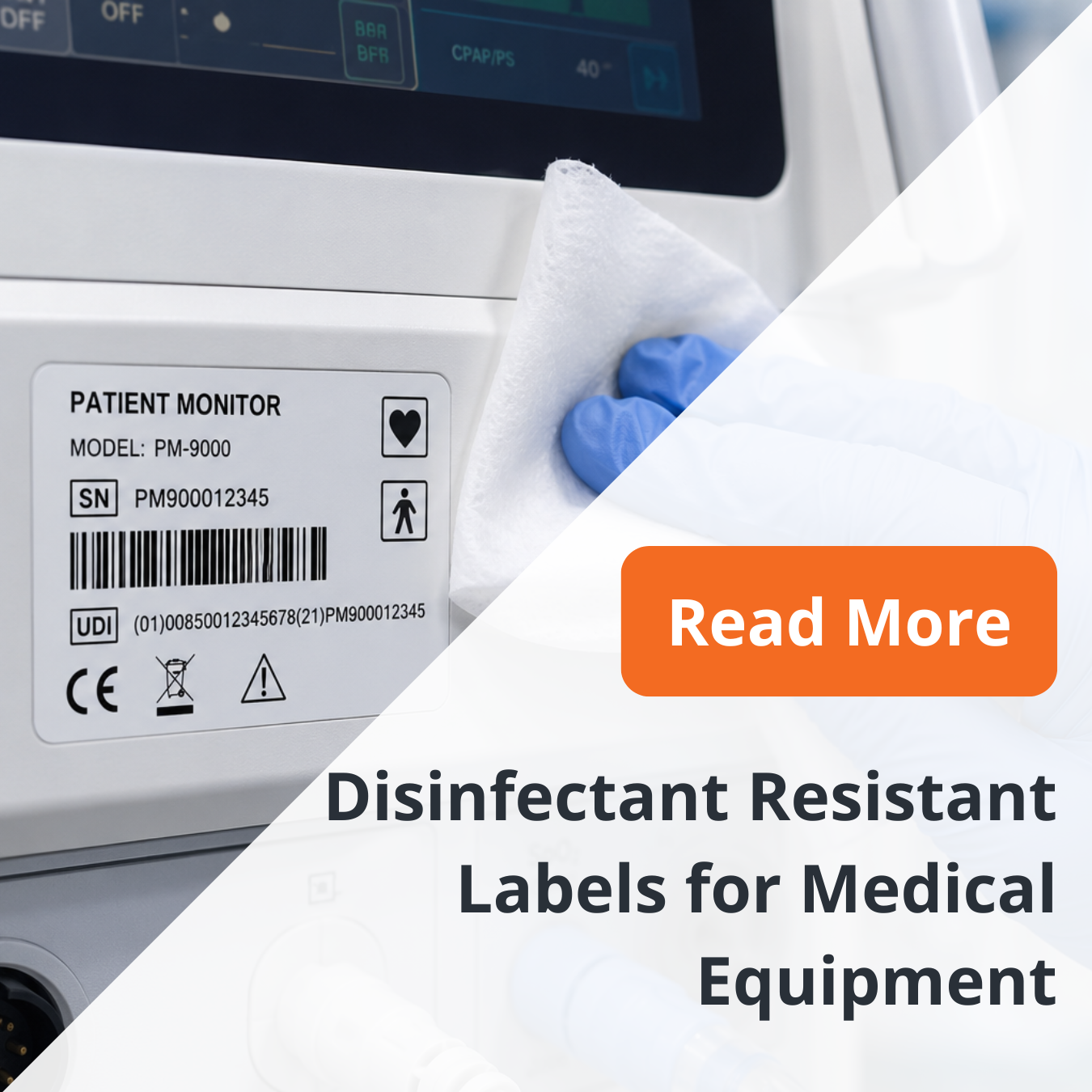
Medical equipment must stay clean. Hospitals and healthcare facilities disinfect equipment many times each day. These cleaning cycles help protect patients, but they can damage ordinary labels.
Disinfectant resistant labels are made to handle repeated cleaning. They resist chemicals, moisture, and wear while keeping important information easy to read. The right label helps protect product identification, traceability, and safety information throughout the life of the equipment.
Why Disinfectant Resistant Labels Matter
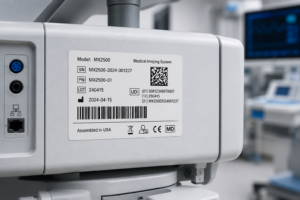
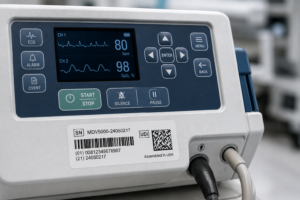
Medical equipment labels carry important information, including:
- Serial numbers
- Barcodes
- QR codes
- Safety warnings
- Operating instructions
- Asset numbers
- Regulatory markings
If a label fades, smears, or peels, users may not be able to identify the equipment or scan its barcode. This can slow maintenance, inventory tracking, and service.
Unlike standard labels, chemical resistant labels are built to withstand repeated exposure to common disinfectants, including:
- Isopropyl alcohol (IPA)
- Hydrogen peroxide cleaners
- Bleach solutions
- Quaternary ammonium (quat) cleaners
- Other hospital-approved disinfectants
Well-designed cleanable medical labels stay attached and remain readable after many cleaning cycles.
Substrate & Surface Energy
Choosing the right material is the first step.
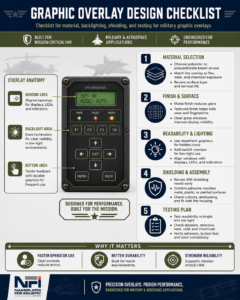
Polyester is a popular choice because it stands up well to moisture, cleaning chemicals, and everyday wear. Polycarbonate is another good option for some equipment, especially when used for graphic overlays or interface components.
The surface also matters.
Medical equipment can be made from:
- Stainless steel
- Aluminum
- Powder-coated metal
- Painted metal
- ABS plastic
- Polycarbonate
- Low surface energy plastics such as polyethylene and polypropylene
Some surfaces are easier to bond to than others. Low surface energy plastics often need special adhesives to create a strong bond.
Matching the face material and adhesive to the equipment surface helps create wipe-down safe labels that stay in place.
Adhesive Selection Framework
The adhesive is just as important as the face material.
When selecting healthcare equipment labels, consider these questions:
- Which disinfectants will touch the label?
- What material is the equipment made from?
- Will the equipment face heat, humidity, or frequent handling?
- How long should the label last?
A label should be designed as a complete system. The face material, adhesive, inks, and protective laminate should work together to meet the needs of the application.
Peel, Shear & Environmental Testing
Testing helps confirm that a label will perform as expected.
Peel Testing
Peel testing measures how much force it takes to remove a label. It shows whether the adhesive stays strong after repeated cleaning.
Shear Testing
Shear testing measures how well a label stays in place under constant load. This is important for labels mounted on vertical surfaces.
Abrasion Testing
Daily cleaning can wear down printed graphics. Abrasion resistant labels use protective laminates or coatings to help keep text, graphics, and barcodes readable.
Chemical Testing
Manufacturers can expose labels to cleaning chemicals, moisture, and solvents to evaluate performance. These tests help determine whether solvent resistant labels and harsh cleaning labels are suitable for a specific application.
Whenever possible, testing should match the actual cleaning products and conditions the equipment will experience.
Choosing the Right Label
No single label works for every medical device.
The best solution depends on:
- Equipment material
- Cleaning products
- Cleaning frequency
- Expected service life
- Environmental conditions
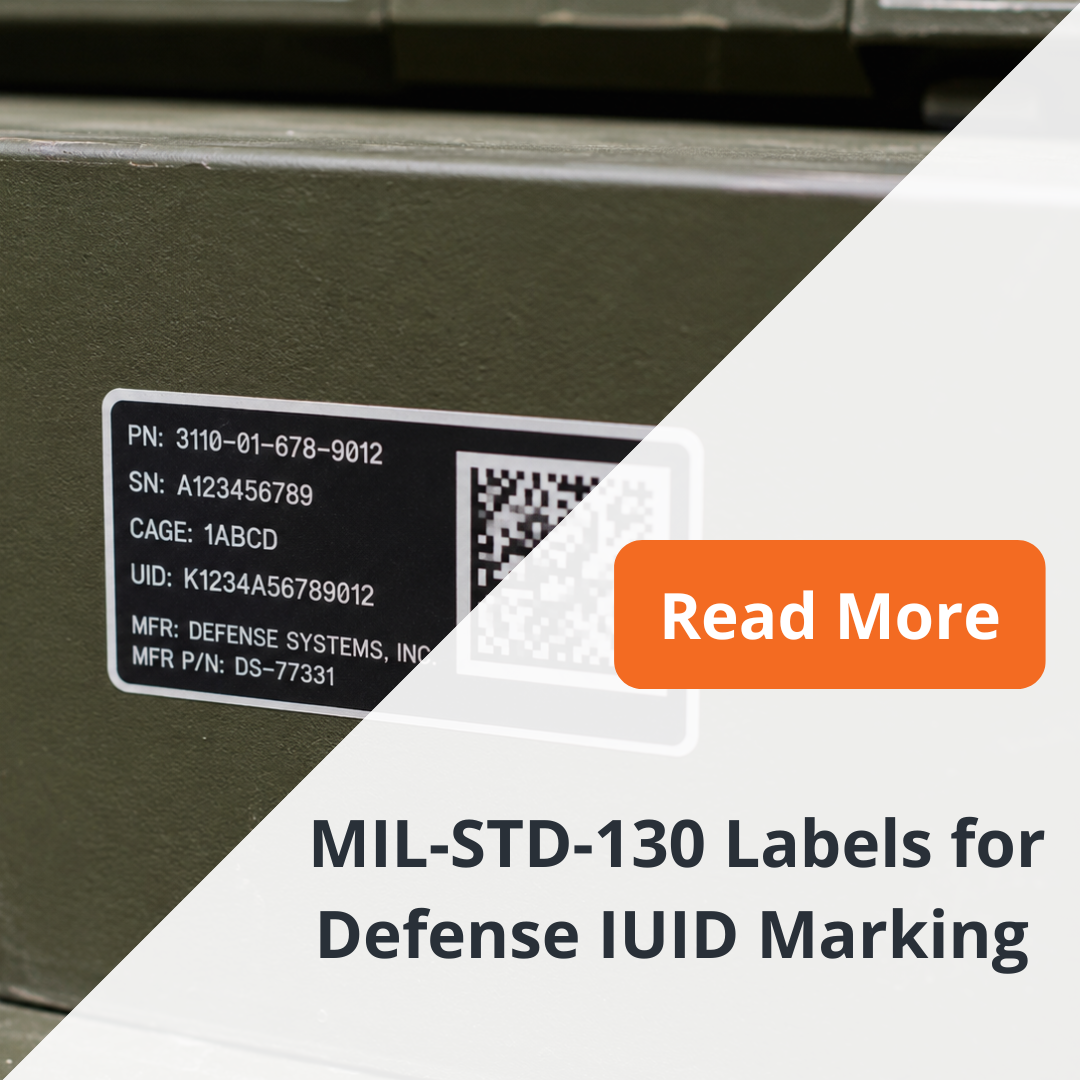
- Barcode or UID requirements
A well-designed label helps reduce peeling, fading, and damage. Durable hospital-grade labels and durable medical stickers help keep equipment identified throughout its service life.
Frequently Asked Questions
What are disinfectant resistant labels?
They are durable labels designed to withstand repeated cleaning with disinfectants while staying attached and easy to read.
What materials work best?
Polyester and polycarbonate are common choices because they provide excellent durability when paired with the right adhesive and protective laminate.
Why is adhesive selection important?
The adhesive must match both the equipment surface and the cleaning environment. The wrong adhesive may fail even if the face material is durable.
How are disinfectant resistant labels tested?
Manufacturers often test peel strength, shear strength, abrasion resistance, and chemical resistance to evaluate label performance.
Keep Equipment Identification Clear
Frequent cleaning should not damage equipment identification. The right combination of materials, adhesives, and testing helps disinfectant resistant labels stay readable and securely attached.
NFI designs durable identification solutions for demanding medical environments, including barcode labels, UID labels, asset tags, and product identification labels.
Contact NFI to discuss durable labeling solutions for your equipment, asset tracking, or traceability program.
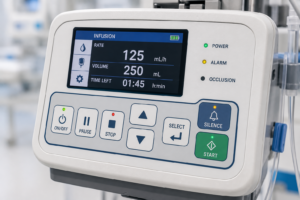
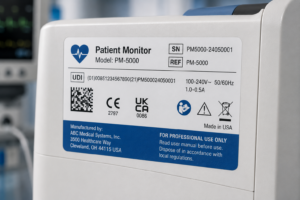 Before production begins, review the interface carefully.
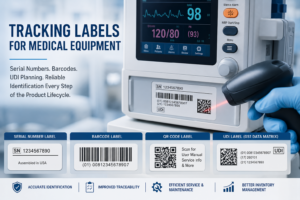

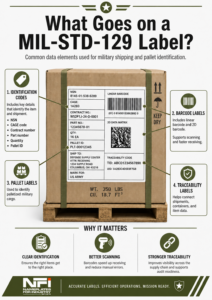

 Manufacturers use serial number labels for:
 Best for:
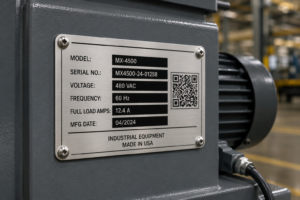 provide better durability in harsh environments.
 Good corrosion resistance


 Heavy equipment