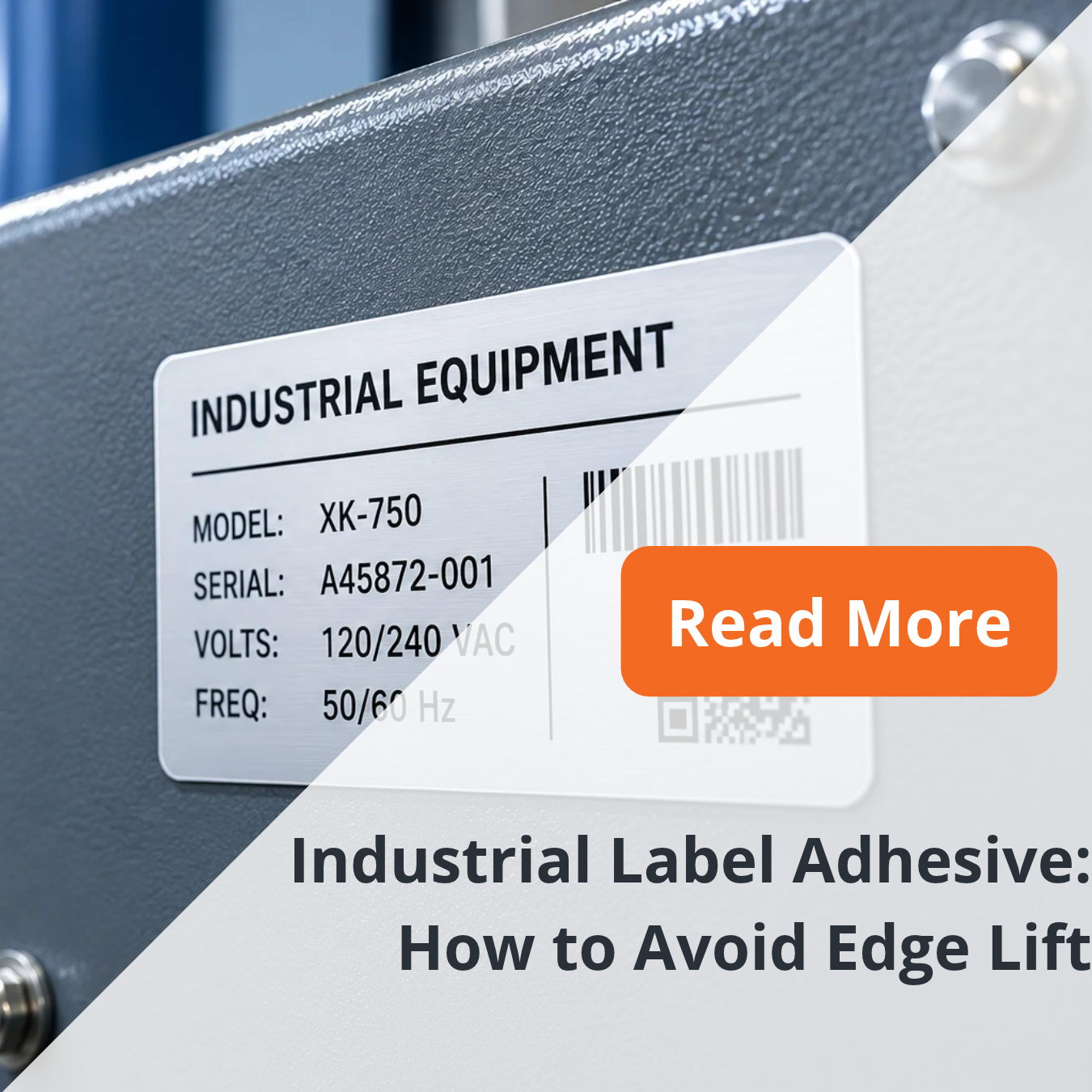
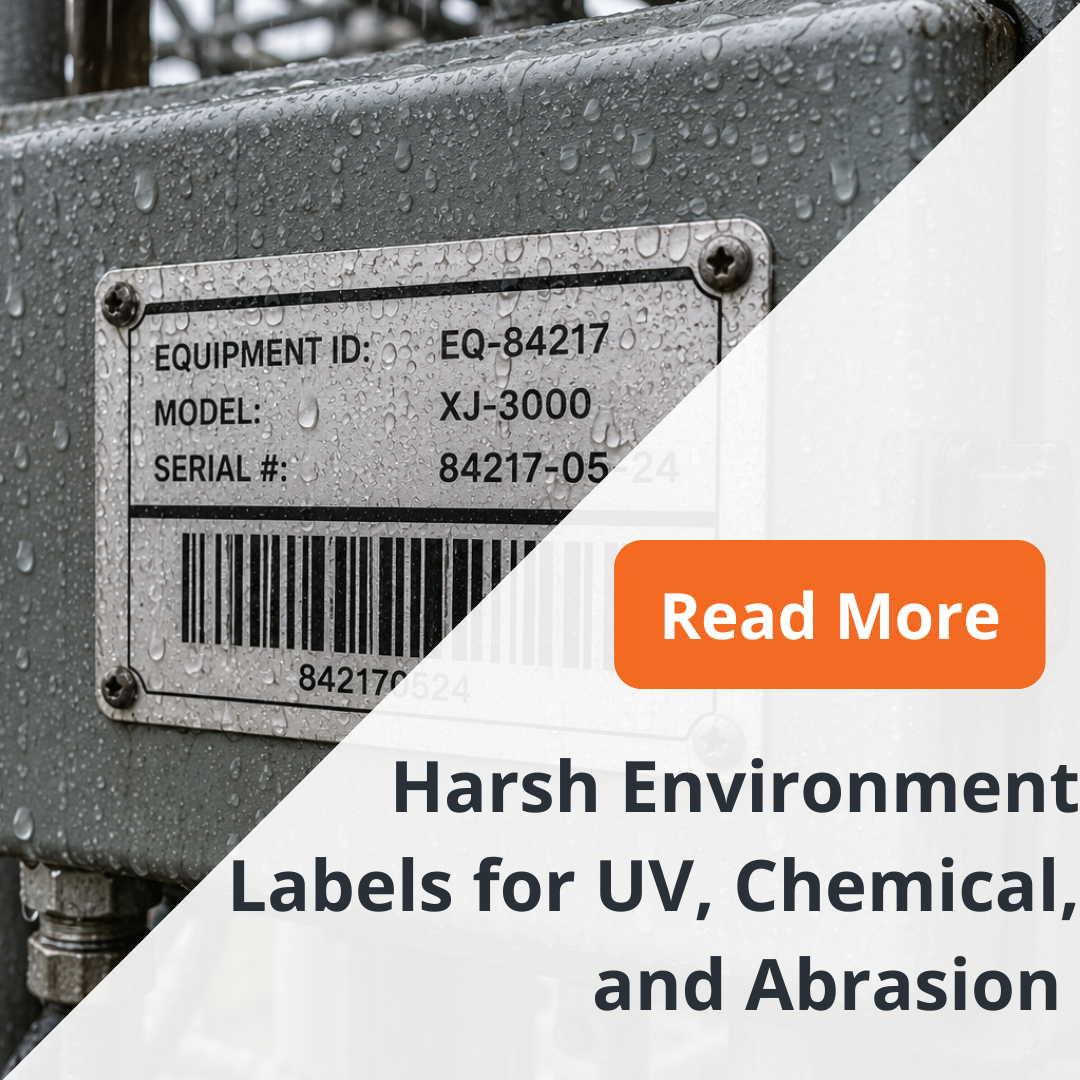
Industrial labels often face tough conditions. Chemicals, sunlight, moisture, cold and abrasion can damage standard labels over time. Durable labels engineered for these environments stay readable and stick securely, protecting barcode readability and long-term equipment identification.
Why Harsh Environment Labels Are Important
Many industries rely on labels for tracking, identification, and safety. If a label fades, peels, or becomes unreadable, it can create problems for operations and maintenance. Harsh environment labels are commonly used on industrial equipment, outdoor machinery, medical devices, communication equipment, and asset tracking systems.
Common Challenges for Industrial Labels
Chemical Exposure
Chemical resistant labels help protect printed information from cleaners, oils, solvents, and industrial chemicals. Without the right material, labels may fade, smear, peel off, or fail barcode scans. Polyester labels are often used because they provide good resistance to many industrial chemicals.
UV and Outdoor Exposure
Outdoor equipment labels must resist sunlight, rain, and changing temperatures. UV resistant labels help reduce fading and cracking caused by long-term sun exposure. Weatherproof labels are commonly used on outdoor control panels, utility equipment, and transportation systems.
Cold and Winter Conditions
Freezing temperatures, moisture, and icy conditions present a different challenge: adhesives can lose strength in low temperatures, and materials can become brittle. NFI Corp designs labels that maintain adhesion in cold storage facilities, outdoor equipment, and industrial machinery, using digital printing technologies suited to cold-weather application.
Abrasion and Wear
Abrasion resistant labels help protect graphics and barcodes from scratches and repeated handling. These labels are useful for manufacturing equipment, tools, warehouse assets, and handheld devices. Protective coatings and durable materials help extend label life.
Material Selection for Harsh Environment Labels
Polyester Labels
Polyester labels are one of the most common options for industrial identification. Benefits include good chemical resistance, UV resistance, strong print quality, and good barcode performance. They are often used for barcode labels, asset tags, UID labels, and equipment labels.
Polycarbonate Labels
Polycarbonate labels are often used for overlays and control panels. Advantages include strong abrasion resistance, high impact resistance, and protected graphics with subsurface printing. These labels are common in medical equipment, electronics, industrial controls, and HMI interfaces.
Anodized Aluminum Labels
Anodized aluminum labels provide high durability for harsh environments. Benefits include excellent outdoor performance, strong chemical resistance, long-term UV resistance, and scratch resistance. They are commonly used on heavy equipment, aerospace systems, military equipment, and permanent asset labels.
Built for Technology and Communication Equipment
Servers, telecom equipment, data cables, and high-performance computing devices need labels that perform reliably under heat, static, abrasion, and chemical exposure. Choosing the correct substrate is the first step: polyester withstands high temperatures and resists chemicals, while UV-resistant materials prevent degradation from prolonged sun exposure. Permanent adhesives engineered for low surface energy or high-heat environments keep labels bonded on textured, powder-coated, or curved surfaces. See NFI’s tamper-evident security labels for applications where product security is also a requirement.
What to Consider When Choosing Labels
Before selecting harsh environment labels, manufacturers should consider indoor or outdoor use, chemical exposure, surface type, temperature range, required lifespan, barcode requirements, and cleaning procedures. The best label material depends on the specific application and environment.
FAQ
What are harsh environment labels?
Harsh environment labels are durable labels designed to resist chemicals, UV exposure, abrasion, moisture, cold, and temperature changes.
Which labels work best outdoors?
Anodized aluminum labels and UV-stable polyester labels work well for outdoor applications.
Are polyester labels chemical resistant?
Many polyester labels offer good resistance to oils, cleaners, and industrial chemicals.
Why is barcode testing important?
Barcode testing helps confirm that labels remain scannable after exposure to harsh environments.
Conclusion
Harsh environment labels help support equipment identification, tracking, and long-term durability in demanding environments. Polyester labels, polycarbonate labels, and anodized aluminum labels each provide different benefits depending on the application. All NFI Corp labels are manufactured in the USA.
More technical guidance: Technical Resources.