
Military Graphic Overlays for Mission-Critical Interfaces
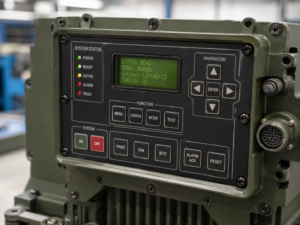
Military graphic overlays are the top printed layer on a control panel, keypad, or equipment interface. They show the buttons, symbols, warnings, windows, and instructions an operator needs to use the system.
For defense and aerospace teams, the benefit is simple. A clear overlay helps operators find the right control faster. A durable overlay also helps protect the interface from wear, moisture, chemicals, sunlight, and rough handling.
Nameplates for Industry, also called NFI, makes durable panel overlays and faceplates for demanding equipment. NFI also supports military membrane switches, MIL-SPEC labels, and military and government identification products.
MIL-SPEC means Military Specification. It refers to military-focused requirements that may apply to the material, marking, durability, or performance of a product.
Material and Finish Selection
The material affects how long military graphic overlays last. It also affects how they look, feel, and perform in the field.
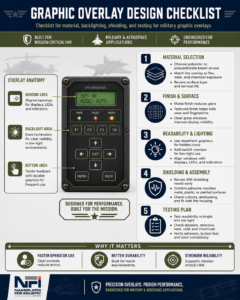
Common materials include polyester and polycarbonate. Polyester is often used for rugged graphic overlays because it can support flexing and wear resistance. Polycarbonate may be used when the design needs clear windows, formed shapes, or a rigid appearance.
The finish also matters. A matte finish can reduce glare. A textured finish can help hide fingerprints and wear. A gloss finish can help with clear display windows.
NFI’s custom overlays and faceplates can support options such as deadfront graphics, clear windows, color windows, embossing, backlit graphics, and custom finishes.
Adhesive choice is also important. Harsh environment overlays may need to bond to metal, plastic, painted parts, or powder-coated surfaces. The surface, temperature, moisture, and cleaning process should guide the adhesive selection.
Readability: Deadfront, Backlighting, and Windows
A control panel must be easy to read. This is especially important in low-light interfaces, aircraft systems, vehicle controls, field equipment, and command systems.
Deadfront graphics hide symbols until the light is on. This keeps the panel clean and simple when the feature is not active.
Backlit overlays help operators see controls in dark areas. They can make military control panels easier to use at night or in low-light spaces.
LED means light-emitting diode. LEDs are small lights often used behind icons, buttons, or status windows. NFI can support designs with LED windows and backlit areas for clearer operator feedback.
Some projects may also need shielded overlays. EMI means electromagnetic interference. EMI can affect electronic signals. Shielded overlays may help support designs where the full interface must manage signal interference.
For more complex interfaces, NFI can pair overlays with military membrane switches. A membrane switch is a thin electrical switch used under the overlay. It lets the user press a button and send a signal to the equipment.
Failure Modes + Test Plan
Overlay failures often start with small design issues. Common problems include peeling edges, worn text, cracked windows, weak adhesive, poor color match, hard-to-read icons, or uneven backlighting.
A test plan helps reduce risk before full production. Review these items during prototype approval:
- Check the overlay size, holes, and cutouts
- Test the adhesive on the real surface
- Confirm readability in bright light and low light
- Review backlit icons and windows
- Test button feel with gloves
- Check exposure to heat, cold, moisture, cleaning chemicals, and abrasion
- Confirm artwork, colors, and symbols match the approved file
This step is important for mission critical HMI. HMI means human-machine interface. It is the point where a person uses controls, screens, or buttons to operate a machine or system.
FAQ
- What are military graphic overlays?
Military graphic overlays are printed interface layers used on defense and aerospace control panels, keypads, and equipment housings.
- Are graphic overlays the same as military membrane switches?
No. The overlay is the top printed layer. The membrane switch is the working switch layer below it. Many systems use both together.
- Why are backlit overlays useful?
Backlit overlays help operators see controls in dark or low-light conditions. They can improve readability and reduce mistakes.
Conclusion
Military graphic overlays help make control panels easier to read, easier to use, and more durable in harsh environments. The best designs start with the right material, finish, lighting plan, adhesive, and test process.
Contact NFI to discuss durable graphic overlays, control panel overlays, or military membrane switches for your defense or aerospace application.