Industrial nameplates help OEMs (Original Equipment Manufacturers) identify and track equipment. They can display serial numbers, safety information, branding, barcodes, and technical data.
For many applications, metal nameplates are the best option because they last longer than standard labels. They can handle heat, chemicals, moisture, abrasion, and outdoor exposure.
OEMs often use industrial nameplates on machinery, medical equipment, electronic systems, and industrial tools where long-term durability matters.
Why OEMs Choose Metal Nameplates
Metal nameplates are commonly used when equipment needs permanent identification. Compared to paper or plastic labels, they can 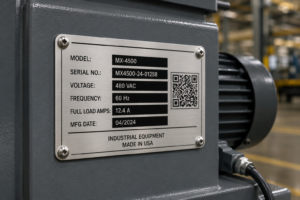 provide better durability in harsh environments.
Metal nameplates are often used for:
- Equipment identification
- Serial number tracking
- Barcode and QR code marking
- Asset tracking
- Safety information
- Product branding
Durable metal tags can stay readable for years, even in demanding industrial environments.
Material and Finish Tradeoffs
The right material depends on the equipment environment and durability needs.
Stainless Steel Nameplates
Stainless steel nameplates are a good choice for harsh conditions. They resist corrosion, chemicals, moisture, and wear.
These equipment nameplates are commonly used for:
- Outdoor equipment
- Medical devices
- Industrial machinery
- Food processing systems
Stainless steel is durable, but it usually costs more than aluminum.
Aluminum Nameplates
Aluminum nameplates are lightweight and cost-effective. OEMs commonly use aluminum nameplates for machinery nameplates and product ID plates.
Benefits of aluminum include:
- Lower weight
 Good corrosion resistance
- Lower cost
- Strong print quality
Anodized aluminum can improve scratch resistance and durability.
Finish Options
Industrial identification plates are available in different finishes, including:
- Matte
- Gloss
- Brushed metal
- Anodized finishes
The finish can affect readability, glare, and overall appearance.
Mounting and Attachment Options
Choosing the right attachment method is important for long-term performance.
Adhesive Mounting
Adhesive-backed metal nameplates work well on smooth surfaces. OEMs often choose them when they need fast installation.
Mechanical Fasteners
Rivets and screws provide stronger attachment for heavy-duty equipment and high-vibration environments.
Many OEMs use both adhesive and mechanical fasteners for extra durability.
Readability and Compliance Checklist
Industrial nameplates should remain easy to read throughout the life of the equipment. 
Before selecting a nameplate, OEMs should consider:
- Will the text stay readable over time?
- Will barcodes remain scannable?
- Can the material handle cleaning and abrasion?
- Will outdoor exposure affect visibility?
- Does the application require serial numbers or tracking information?
Different industries require different identification and compliance standards, so OEMs should carefully choose materials and marking methods.
Choosing the Right Industrial Nameplate
The best industrial nameplates depend on the environment, mounting requirements, and durability needs of the equipment.
Metal nameplates are often the preferred choice when OEMs need long-lasting identification for machinery and industrial systems.
NFI manufactures industrial nameplates, durable metal tags, barcode labels, and identification solutions for demanding OEM applications.
FAQ
What are industrial nameplates used for?
Industrial nameplates identify equipment using serial numbers, technical information, safety details, or tracking data.
What is the difference between aluminum and stainless steel nameplates?
Aluminum nameplates are lighter and lower cost. Stainless steel nameplates offer stronger corrosion and chemical resistance.
Are metal nameplates good for outdoor use?
Yes. Metal nameplates are commonly used outdoors because they can handle weather, UV exposure, and moisture.
What mounting methods do OEMs use for equipment nameplates?
Common methods include adhesives, rivets, and screws.
Can industrial nameplates include barcodes and serial numbers?
Yes. Many OEM nameplates include serial numbers, barcodes, QR codes, and other variable data.
Contact NFI to discuss durable labeling solutions for your equipment, asset tracking, or tracking program.