Sustainable Packaging for Medical Manufacturers
In the medical industry, a good packaging solution does more than protect products during shipping. It also supports efficiency, product identification, and compliance. For many medical device manufacturers, packaging now plays a role in both performance and sustainability.
Today, companies in the healthcare sector face growing pressure to meet regulatory requirements while improving their sustainability practices. They want to reduce waste, lower their carbon footprint, and work with suppliers that understand regulated environments. That is why more buyers ask how suppliers reduce packaging and if they have explored better options.
For NFI, this is a chance to add value beyond the product itself. As a supplier of durable barcode labels, UL labels, and serial number labels, NFI helps customers protect traceability. It also supports long-term product performance.
Why Packaging Matters in Health Care
Packaging affects more than shipping. In large healthcare systems, it can influence receiving accuracy, storage, handling, and product identification. That matters for medical supplies, equipment, and durable labels used throughout the supply chain.
At the same time, many organizations want more environmentally friendly operations. They are reviewing packaging design, raw materials, and excess plastic packaging to find ways of reducing environmental impact. Still, any change must protect the product and maintain regulatory compliance. In medical environments, sustainability and quality have to work together.
What a Better Packaging Solution Looks Like
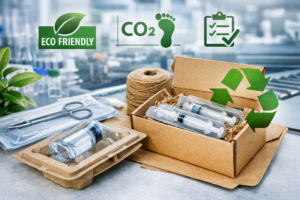
A stronger packaging solution starts with asking practical questions. Is the current packaging still necessary? Are there better ways to organize shipments? Can waste be reduced without affecting product protection?
For example, some companies may be able to reduce extra layers, eliminate unused space, or consider recyclable materials where appropriate. The goal is not simply to use less. The goal is to improve packaging in a way that still supports traceability, condition, and ease of use.
This matters especially for identification products like medical barcode labels, which must remain legible, durable, and easy to process throughout the product lifecycle. NFI’s experience with variable data, barcode formats, and strict labeling standards makes that possible in demanding medical applications.
Why Buyers Are Asking More Questions
More healthcare professionals, procurement teams, and manufacturers now expect suppliers to support both compliance and sustainability. In some cases, that includes related areas such as pharmaceutical packaging and the handling of pharmaceutical products, where packaging decisions can directly affect workflow and control.
Buyers want to know whether suppliers review packaging regularly, whether they can reduce material use, and whether they understand the balance between waste reduction and compliance. They are not just looking for claims. They want signs of discipline and continuous improvement.
How NFI Can Help
NFI can support customers by combining durable product identification with practical packaging awareness. Whether the project involves custom barcode labels, UL-certified labels, or serial number labels and tags, the goal is the same: deliver reliable products while helping customers improve operational efficiency.
That approach supports customers who want a supplier that understands regulatory requirements, product durability, and smarter ways of reducing packaging without creating new risk.
Conclusion
A smart packaging solution can help medical device manufacturers do more than ship products safely. It can support regulatory compliance, improve handling, and contribute to reducing environmental impact across the healthcare sector.
For NFI, this is an opportunity to show value beyond the label itself. By combining durable identification products with thoughtful support for better packaging decisions, NFI helps customers meet quality, traceability, and sustainability goals in a practical way.