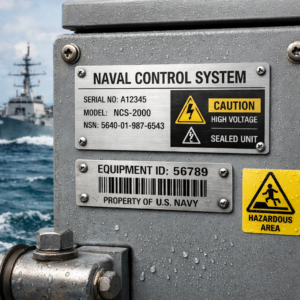
Corrosion-resistant nameplates: Coatings and Materials for Naval Defense Equipment
Naval equipment labels must stay readable and attached in some of the toughest conditions possible. On naval defense equipment, labels face salt spray, moisture, chemicals, abrasion, and changing temperatures. That is why material and coating choice matters. For long-term performance, naval programs often use metal nameplates or durable film labels built for harsh marine service.
If a label fails, the problem is bigger than appearance. It can affect safety, maintenance, traceability, and compliance. Good ocean environment labeling helps ensure critical information stays in place when crews need it.
Marine environments vs labels
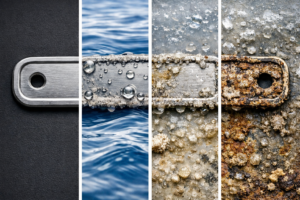
Marine conditions are hard on standard labels. Saltwater speeds up corrosion. Humidity weakens poor adhesive systems. Regular cleaning can expose labels to solvents, oils, and harsh chemicals. Sunlight and wear add even more stress.
That is why naval applications often need harsh environment labels instead of standard commercial products. Basic materials may fade, peel, crack, or become unreadable too soon.
Common uses include:
-
Exterior equipment
Labels on housings, panels, and exposed equipment need strong resistance to salt, water, and UV exposure.
-
Identification and tracking
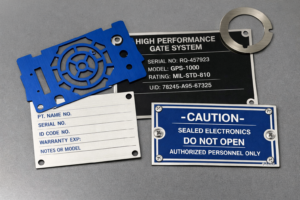
Serial plates, barcode labels, and warning labels must remain legible for the life of the equipment.
-
Chemical exposure areas
Spaces exposed to fuels, cleaners, and hydraulic fluids need chemical resistant labels that can keep their print and adhesion.
-
Coating and material options
The best construction depends on the use case, but a few options stand out for naval defense equipment.
-
Anodized aluminum
Anodized labels are widely used when durability is critical. The anodized surface helps protect the image from wear, weather, and many chemicals. This makes anodized aluminum a strong choice for long-lasting identification.
-
Stainless steel
Stainless steel is often used when maximum toughness and corrosion resistance are needed. It is a reliable option for permanent marine nameplates in demanding settings.
-
High-performance polyester
Some corrosion resistant labels use polyester or other engineered films instead of metal. These materials can work well when fine detail, flexibility, or specific adhesive performance is needed.
-
Coatings, laminates, and adhesives
For saltwater labels, the topcoat and adhesive are just as important as the face material. Protective coatings improve resistance to moisture, abrasion, and chemical exposure. Strong adhesive systems help labels stay attached to the surface. The best results come from complete constructions made with marine-grade materials.
-
Standards and test methods
Performance should be tested, not assumed.
-
UL 969
UL 969 is an important standard for label durability. It looks at marking and labeling system performance, including adhesion and legibility. For some projects, it can be a useful benchmark.
-
Salt spray and chemical testing
Salt spray testing helps evaluate corrosion resistance in marine conditions. Chemical testing checks whether labels can withstand fuels, cleaners, and solvents. These tests are important for marine nameplates and other saltwater labels used in defense settings.
Choosing the right naval equipment labels means matching the material, coating, adhesive, and test requirements to the real environment. NFI manufactures durable identification products for military and aerospace applications, including corrosion resistant labels, anodized labels, and other custom solutions for ocean environment labeling. For naval defense equipment, we help customers specify durable, readable labels built for long service in harsh conditions. Request a quote to get started.