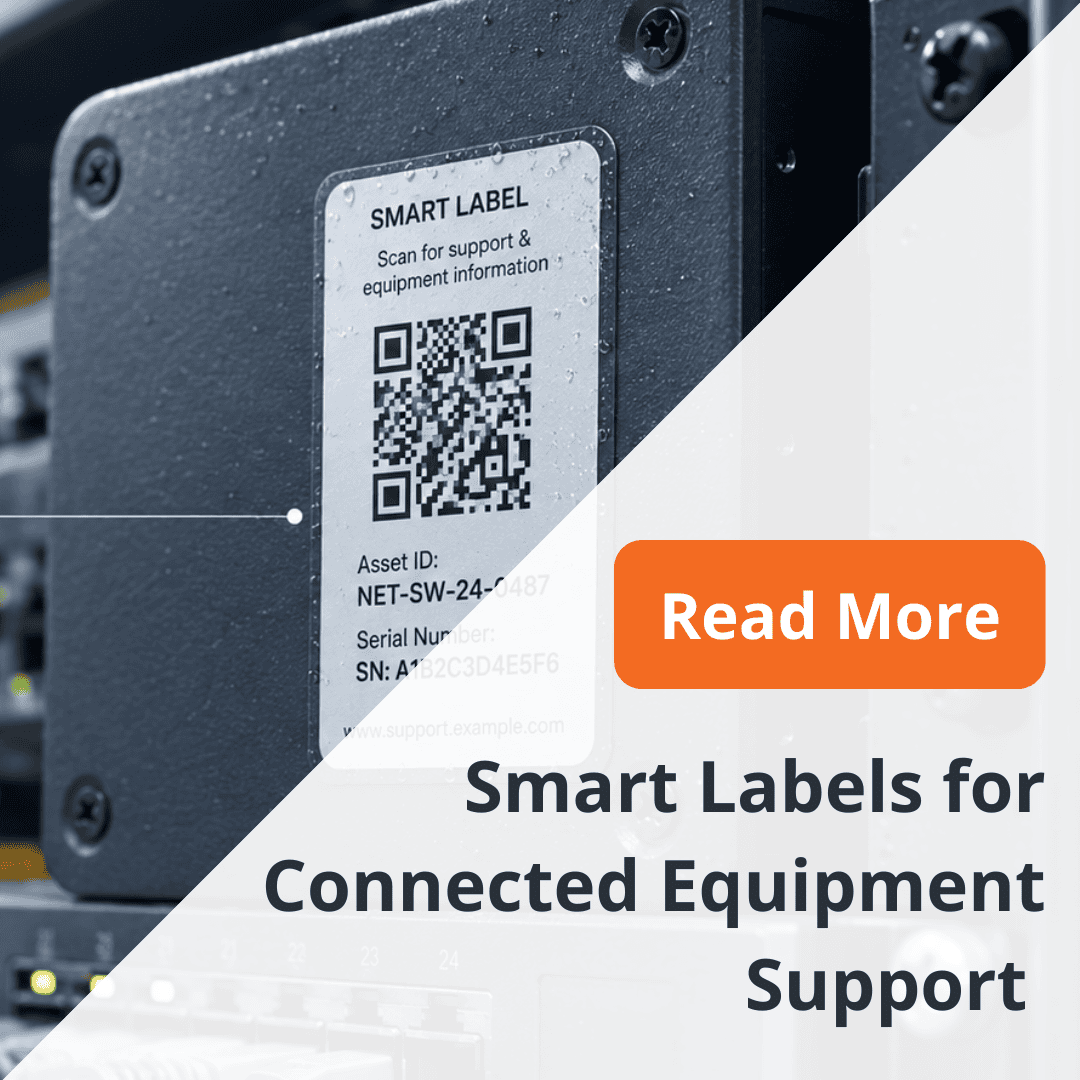
Smart labels help technology and communication manufacturers connect physical products to digital product information. A smart label may include a QR code, NFC chip, RFID inlay, barcode, serial number, or other variable data. These labels can help users find support details, track equipment, and confirm product records.
For connected equipment, the right label depends on how people scan it. It also depends on where you place the label. It depends on what data the product needs to share. QR code labels, NFC labels, and RFID labels all support digital access, but each one works best in a different use case.
NFI helps OEMs create durable labeling solutions for equipment that needs clear identification, reliable scanning, and long-term tracking.
 Smart Labels Use Cases and Data Model
 Smart Labels Use Cases and Data Model
Smart labels work best when the data plan is clear. Before choosing a format, define what the label needs to do.
Common use cases include:
- Linking users to product information
- Opening setup guides or manuals
- Supporting field service teams
- Tracking equipment location
- Confirming serial numbers
- Helping with product authentication labels
- Managing service or warranty records
In many cases, the label does not need to store all the data. Instead, it carries a unique ID. That ID links to a web page, service portal, or database.
This keeps the physical label simple. It also lets the manufacturer update digital content without replacing the label.
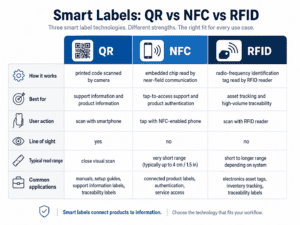
For example, a QR code label may link to installation instructions. An NFC label may open a service page when a technician taps it. An RFID label may help a team track many electronics asset tags during inventory.
Format Selection: QR vs NFC vs RFID
Each smart label format has a clear role.
QR code labels are easy to use. Most people can scan them with a phone camera. They work well for manuals, setup instructions, support information labels, registration pages, and product information. QR labels need clear visual access and good print quality.
NFC labels use tap-based access. A technician can place an NFC-enabled phone near the label to open data or confirm a product record. NFC labels work well for connected product labels, service workflows, and product authentication labels. They are useful when the user experience needs to be fast and simple.
RFID labels use radio-frequency scanning. They can help teams identify assets without scanning each label by sight, depending on the system and environment. RFID labels are often useful for inventory, asset tracking, and tracking labels.
The best choice depends on the workflow. Use QR when people need quick access to support content. Use NFC when tap access improves the process. Use RFID when the goal is faster tracking across many assets.
Durability and Scan-Grade Testing
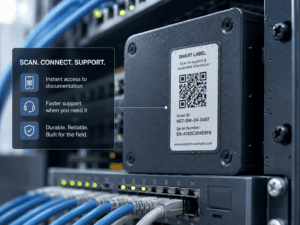
Smart labels must stay readable for the life of the product. A damaged or unreadable label can slow down support, weaken tracking, and create extra work for service teams.
Durability depends on the full label design. This includes the substrate, adhesive, print method, coating, size, and placement. Labels used on technology and communication equipment may face handling, abrasion, cleaning, heat, moisture, or UV exposure.
Scan quality also matters. QR code labels need strong contrast, clean edges, enough white space, and the right size. Variable data labels should be checked before production to make sure each code, number, or serial record is correct.
NFC labels and RFID labels need different testing. Teams should check read range, surface material, label placement, and possible interference from metal or electronics.
Testing labels on the actual equipment is the best way to confirm performance.
Frequently Asked Questions About Smart Labels
 Frequently Asked Questions About Smart Labels
What are smart labels?
Smart labels connect a physical product to digital information. They may use QR codes, NFC, RFID, barcodes, serial numbers, or other variable data.
Which smart label is best for product information?
QR code labels are often the best choice for simple product information because users can scan them with a phone.
Which smart label is best for traceability?
RFID labels, QR code labels, and serialized traceability labels can all support traceability. The best option depends on the tracking system and scan process.
Can smart labels support product authentication?
Yes. Product authentication labels can connect a unique product ID to a controlled digital record.
Conclusion
Smart labels give technology and communication manufacturers a better way to support connected equipment. QR code, NFC, and RFID labels each offer unique benefits for product information, service access, authentication, and traceability.
NFI can help you choose durable smart labels and electronics asset tags for your equipment.
We can also help you choose variable data labels and support information labels. Contact NFI to discuss labeling solutions built for long-term performance.