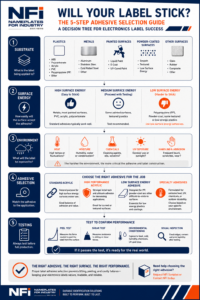

A label can look perfect and still fail if the adhesive does not match the surface. Good label adhesive selection helps electronics labels stay flat, readable, and attached through normal use.
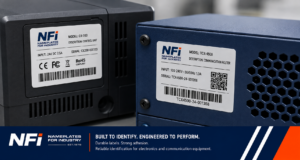
Technology and communication products may use plastic housings, painted panels, powder-coated metal, or textured parts. Each surface bonds differently. Before choosing durable adhesive labels, look at the surface, environment, and expected product life.
NFI helps manufacturers match label materials and adhesives to the application. Explore NFI industrial labels.
Substrate & Surface Energy
Surface energy describes how easily an adhesive spreads across and bonds to a surface. In simple terms, some materials are easier to stick to than others.
Metals and many high-surface-energy plastics can work with standard pressure-sensitive adhesives. Low-surface-energy plastics, such as polypropylene, and many powder-coated finishes can be harder to bond. They may need a low surface energy adhesive made for these surfaces.
Texture also matters. A rough panel gives the adhesive less direct contact. A thicker adhesive may help fill small gaps and improve panel label adhesion.
Quick Surface Check
- What is the housing made from?
- Is it painted or powder coated?
- Is it smooth or textured?
- Is the panel flat or curved?
- Was the surface cleaned before application?
See NFI’s plastic label and adhesive options.
Adhesive Selection Framework
Do not choose an adhesive by strength alone. Match it to the full application.
Use this five-step check:
- Identify the material. Confirm the plastic, metal, paint, or coating.
- Check the surface. Look at surface energy, texture, shape, and cleanliness.
- Review the environment. Will the label face heat, moisture, cleaners, UV, or frequent handling?
- Define the service life. Permanent labels and long-life product labels need an adhesive suited to the expected use.
- Test before production. Apply the final label to a surface that matches the real product.
A heat resistant adhesive may be needed near power supplies or electronics that run warm. Industrial adhesive labels used outdoors or near service areas may also need resistance to moisture and cleaners.
For specific adhesive properties, review NFI’s material data sheets.
Peel/Shear + Environmental Testing
Testing can help find adhesion problems before full production.
Peel testing checks how much force is needed to pull a label from the surface. Shear testing checks whether the label slides when force is placed across the bond.
Your test should also reflect real conditions:
- Heat and temperature changes
- Humidity or moisture
- Cleaning chemicals
- UV exposure
- Abrasion and handling
- Time after application
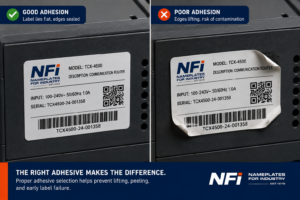
After testing, ask: Are the edges lifting? Has the label moved? Is the printed information still easy to read?
The best label adhesive selection is based on the real surface and environment. Testing the complete label construction can help reduce lifting, peeling, and early failure.
Want to test an option first? Request NFI product samples or contact NFI to discuss durable labeling solutions for your electronics equipment and product identification needs.