
Every business relies on valuable assets. These might include machinery, tools, computers, medical equipment, vehicles, or inventory. But as businesses grow, keeping track of those assets becomes harder.
Equipment moves between departments. Employees take tools into the field. Computers get reassigned. Machinery needs regular maintenance. Without a reliable asset tracking system, businesses can quickly lose track of what they own, where it is, and who is responsible for it.
A strong asset tracking program makes that process easier. With durable asset tracking labels and a consistent system, your team can identify equipment quickly, keep records accurate, and better protect valuable assets.
What Is Asset Tracking?
Asset tracking helps businesses identify and manage physical assets throughout their useful life.
The process starts by giving each asset a unique identifier. That identifier can appear on a barcode label, serial number label, or asset tag. Your team can then connect the physical item to important information in your asset management or inventory system. 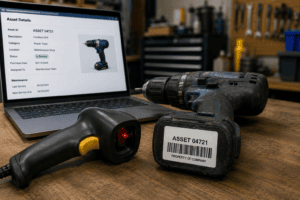
For example, an employee can scan a barcode on a piece of equipment and connect that equipment to its digital record.
Depending on your needs, that record might include:
- Asset ID
- Description
- Location
- Owner or department
- Acquisition date
- Maintenance information
- Current status
The goal is simple: know what you own, where it is, and what is happening with it.
Why Is Asset Tracking Important?
An effective asset tracking system gives your team better control over equipment and inventory.
Improve Visibility
Your team should not have to spend valuable time searching for equipment.
Asset identification makes it easier to see what your company owns and where each item belongs. This can help businesses manage everything from laptops and tools to machinery and field equipment.
Increase Accuracy
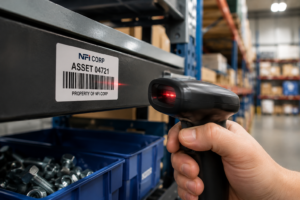 Manual data entry can lead to mistakes. Barcode asset labels allow employees to scan an identifier instead of repeatedly typing serial numbers or asset IDs.
That can help your team connect activity to the correct asset record.
Create Accountability
Who has the equipment? Where did it go? When should it come back?
A clear asset tracking process helps answer those questions. When businesses combine unique asset tags with consistent check-in, check-out, and transfer procedures, they can improve accountability and reduce misplaced equipment.
Simplify Maintenance
Many assets require inspections, service, calibration, or repairs.
An asset tag can connect a piece of equipment to its maintenance history. Instead of relying on paperwork or memory, your team can quickly identify the asset and find the information it needs.
How Do You Choose the Right Asset Tracking Label?
The label you choose matters. A label that works well on an office laptop may not survive on outdoor equipment or industrial machinery.
Before choosing a label, ask three questions.
- Where Will You Use It?
Think about the asset’s environment.
Will the label face sunlight, moisture, chemicals, abrasion, high temperatures, or frequent cleaning?
Understanding the environment helps you choose a label that can handle those conditions.
- What Surface Are You Labeling?
Adhesives perform differently depending on the surface.
A label may need to bond to painted metal, plastic, glass, or a textured powder-coated surface. Choosing the right material is important, but you also need an adhesive designed for the application.
- How Will Your Team Use the Label?
Decide what you want the label to accomplish.
Do employees simply need to identify the asset? Will they scan it regularly? Does it connect to service records? Do you need evidence if someone removes the label?
Your answers will help determine the best asset identification solution.
Common Types of Asset Tracking Labels
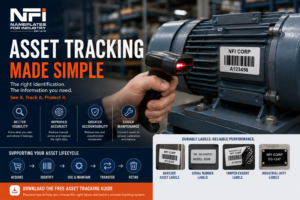 NFI Corp offers several options for identifying and tracking assets.
Barcode asset labels make repeatable scanning fast and convenient. Businesses can use barcodes to connect physical equipment with inventory or asset management records.
Serial number labels give each asset a unique identifier. They work well for equipment identification, warranty information, service records, and traceability.
Tamper-evident labels can show visible evidence of removal. Businesses may use them for IT equipment, electronics, and other controlled assets.
Durable asset labels can withstand demanding environments. Manufacturers can design them around exposure to chemicals, abrasion, UV, weather, and other challenging conditions.
How to Start an Asset Tracking Program
You do not need to track every possible piece of information from day one. Start with a system your employees can actually use and maintain.
Follow these five steps:
- Define your assets.Decide which equipment, inventory, tools, or property you want to track.
- Choose your data.Determinewhat information your team needs for each asset.
- Choose the right label.Match the material, adhesive, print method, and security features to the asset and its environment.
- Standardize label placement.Place labels where employees can easily see and scan them. Use the same general location on similar equipment whenever possible.
- Maintainyour records. Decide who will update your system when assets move, require service, change ownership, or reach the end of their useful life.
A simple, consistent process often works better than a complicated system that employees struggle to maintain.
Build an Asset Tracking System That Lasts
Your asset tracking system depends on the identification attached to each asset.
If a label falls off, becomes unreadable, or cannot withstand its environment, your team may lose the connection between the physical asset and its record.
NFI Corp manufactures barcode labels, serial number labels, inventory labels, and equipment asset tags for a wide range of applications. By considering the surface, environment, expected service life, and data requirements, NFI can help you choose a durable identification solution that fits the job.
See it. Track it. Protect it.
Ready to improve the way you identify and manage your assets? Download NFI Corp’s Asset Tracking Made Simple Guide for practical tips on choosing labels, organizing asset data, and creating an effective tracking program.