
Harsh Environment Labels: What Makes Them Last?
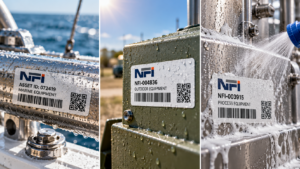
Harsh environment labels must do more than stick to a surface. They may face sunlight, chemicals, oils, water, abrasion, heat, cold, and daily handling.
A standard label may fade, peel, or become hard to read under these conditions. NFI takes a different approach. We match the material, printing method, and adhesive to the application.
Why Do Industrial Labels Fail?
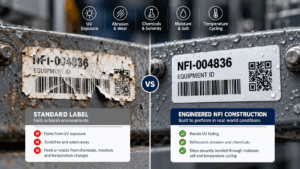
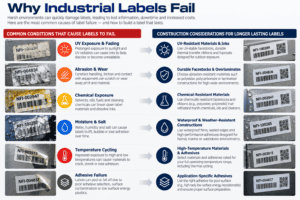
Labels often fail because their construction does not match the environment.
UV exposure can fade printed graphics. Abrasion can wear away text. Chemicals and cleaners may damage inks or materials. Water and temperature changes can affect adhesion.
The mounting surface also matters. An adhesive that works well on smooth metal may not perform the same way on textured or powder-coated surfaces.
That is why buyers should look beyond price. A durable label starts with the right construction.
What Makes NFI Harsh Environment Labels Different?
NFI designs industrial labels around the needs of each application.
The process starts by looking at the environment. Where will the label be used? What will touch it? How long must it stay readable?
NFI can then select the right materials, printing methods, and adhesives.
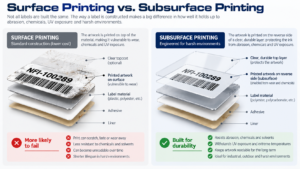
For demanding applications, subsurface printing can add another layer of protection. NFI prints the graphics on the back of a clear material. The material then protects the printed image from direct contact.
This construction can help protect text, colors, barcodes, and serial number labels from wear.
Is Subsurface Printing Really More Durable?
There is a clear physical difference between surface and subsurface printing.
With surface printing, the environment can directly contact the printed image unless another protective layer covers it.
With subsurface printing, the clear face material sits between the graphics and the environment. This can help protect the image from abrasion, handling, cleaning, and weather.
Not every application needs this level of protection. NFI helps customers choose a construction based on the actual conditions.
What Does NFI’s Durability Testing Show?
Buyers should look for evidence behind durability claims.
NFI publishes test information for its urethane-domed constructions. Testing includes UV and water exposure, outdoor weathering, humidity, salt spray, abrasion, impact, gasoline, chemicals, and heat.
In one accelerated aging test, samples received 500 hours of UV light and water-spray exposure. NFI reported no significant deterioration or noticeable change in color or gloss.
These results apply to the tested construction. The right testing and material should always match the specific application.
Are Premium Labels Worth the Cost?
A cheaper label may work well in a mild indoor setting. Harsh environments create a different cost question.
If a label fails, a company may need to pay for a replacement, labor, equipment access, field service, or downtime.
Instead of comparing only the purchase price, consider:
Label cost + replacement labor + downtime + service costs.
A more durable label may provide better long-term value when replacing a failed label is difficult or expensive.
Choose Harsh Environment Labels for the Application
Before choosing a label, consider UV exposure, chemicals, water, temperature, abrasion, mounting surface, and required service life.
NFI can help match those conditions with the right materials, printing methods, and adhesives. The goal is not to overbuild every label. It is to build harsh environment labels for the conditions they need to handle.
Contact NFI to discuss durable labeling solutions for your equipment, asset tracking, or traceability program.