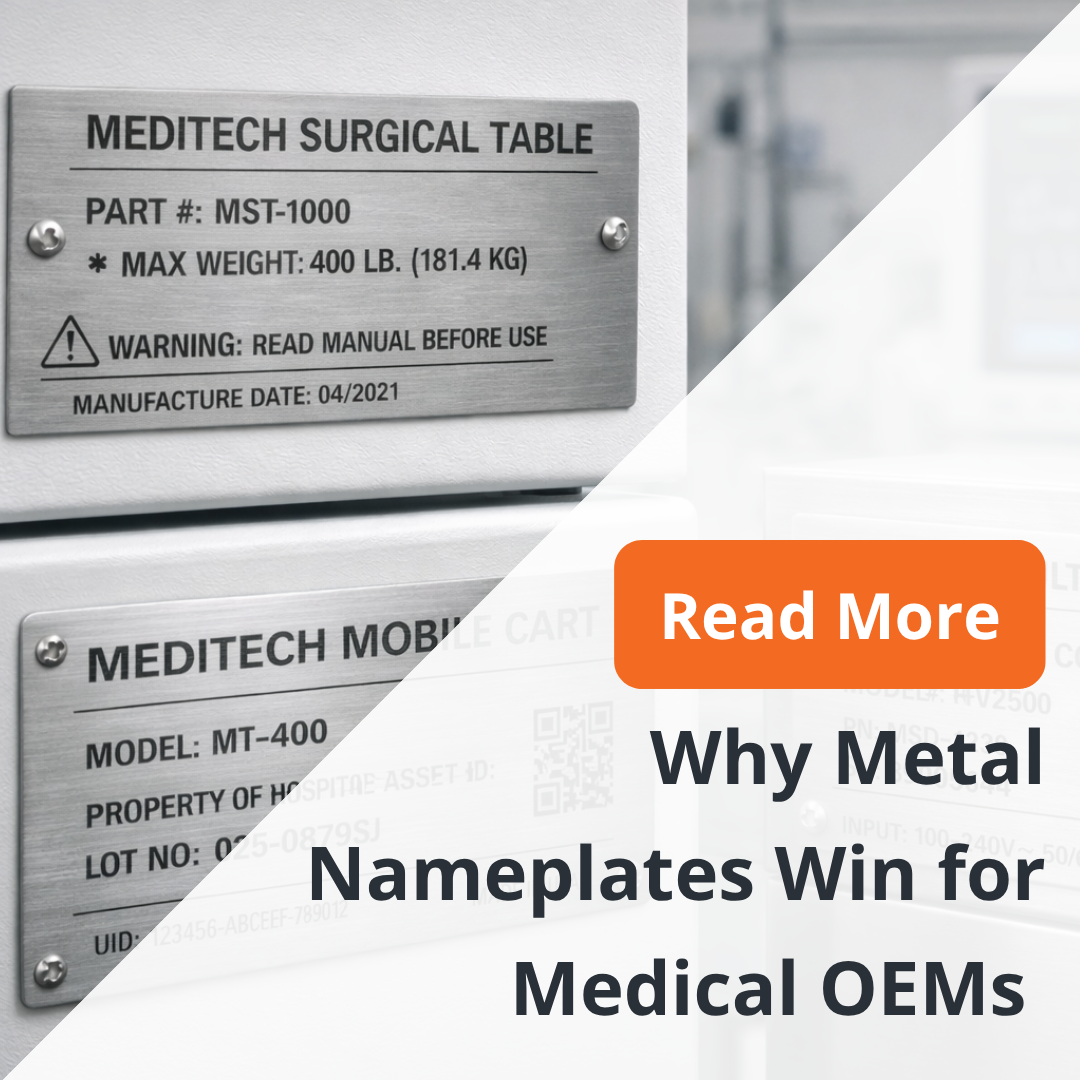
In the medical industry, identification failure is rarely a small problem. When a plate is hard to read, starts lifting, or looks worn, it can cause service delays. It can also lead to replacement costs and avoidable trust issues. That is why many original equipment manufacturers (OEMs) choose industrial nameplates when long-term performance matters most.
For medical devices and equipment, metal often wins because it supports durability, legibility, and a more permanent impression. Compared with less durable options, metal nameplates are often a safer choice. They work well when equipment is cleaned often.
They also hold up to repeated handling. They can last for years of use. In other words, choosing the right identification plate early can help prevent expensive problems later.
From diagnostic systems to lab analyzers and sterilization units, well-made equipment nameplates show key product details clearly. They also reinforce product quality. For OEMs that want ID to last as long as the equipment, metal is often a better long-term investment.
See NFI’s corrosion-resistant equipment nameplates for the full metal nameplate product line.
Material and Finish Tradeoffs
Material selection has a direct impact on performance. The best industrial nameplates for medical equipment match the real operating environment, not just the initial cost target.
Stainless steel nameplates are often selected when maximum corrosion resistance, strength, and premium appearance are priorities. In medical settings, where surfaces may be exposed to cleaning agents and repeated wipe-downs, stainless steel offers a strong sense of permanence and reliability. It is especially attractive for higher-end systems where appearance and durability both matter.
Aluminum nameplates are also a popular option because they combine durability with lighter weight and design flexibility. For many medical applications, aluminum delivers an excellent balance of performance, appearance, and cost control. When properly specified, aluminum nameplates can provide long-lasting identification without adding unnecessary weight or complexity.
Finish matters as much as material. Brushed, matte, or protected finishes can improve readability and reduce glare under bright facility lighting. For medical OEMs, the right finish helps preserve critical text and supports a clean, professional appearance throughout the product life cycle.
Mounting and Attachment
Even the best industrial identification plates can underperform if the attachment method is wrong. A nameplate that peels, shifts, or detaches can undermine the credibility of the equipment and create avoidable service issues.
Adhesive mounting is often a strong solution for smooth, well-prepared surfaces. It creates a clean look and supports streamlined assembly. Many product ID plates for medical equipment use high-performance adhesives when appearance, speed, and reliable bond strength are key requirements.
Mechanical fastening, such as screws or rivets, may be a better choice when added permanence is needed. This can be especially valuable for larger equipment, high-contact applications, or environments where long-term retention is critical. In some cases, combining adhesive and mechanical attachment offers added security.
For machinery nameplates and other long-life identification components, mounting decisions should be made early in the design process. Surface texture, cleaning exposure, shape, and service conditions all influence long-term performance. Getting attachment right from the beginning reduces risk later.
Legibility and Compliance Checklist
In medical environments, readability is not optional. Important information must remain clear for operators, technicians, inspectors, and service teams throughout the life of the equipment.
When specifying original equipment manufacturer nameplates, use this practical checklist:
- Is the information easy to read?
- Text, numbers, and symbols should remain sharp and high-contrast. A professional layout improves usability and reduces the chance of error.
- Will the plate remain legible after repeated cleaning?
- Medical equipment is cleaned often. The material and finish should support long-term readability under real-use conditions.
- Does the layout prioritize essential information?
Many equipment nameplates include model numbers, serial numbers, manufacturer details, and operational reference data. The most important information should be immediately visible.
Is the selected material right for the environment? Stainless steel nameplates and aluminum nameplates each offer different advantages. The best choice depends on exposure, wear, and product expectations.
Will the attachment last for the life of the equipment? Reliable mounting helps durable metal tags and plates stay secure, readable, and aligned with the product’s expected service life.
For many medical applications, industrial nameplates are the preferred choice because they reduce identification risk while supporting a stronger brand impression. When a manufacturer wants equipment to look credible, remain traceable, and stay readable over time, metal is often the clear answer.
Nameplates for Industry (NFI) works with medical manufacturers to produce custom metal nameplates, industrial identification plates, and OEM nameplates built for demanding environments. Contact NFI to discuss the right material, finish, and attachment strategy for your next medical equipment program.
More technical guidance: Technical Resources.