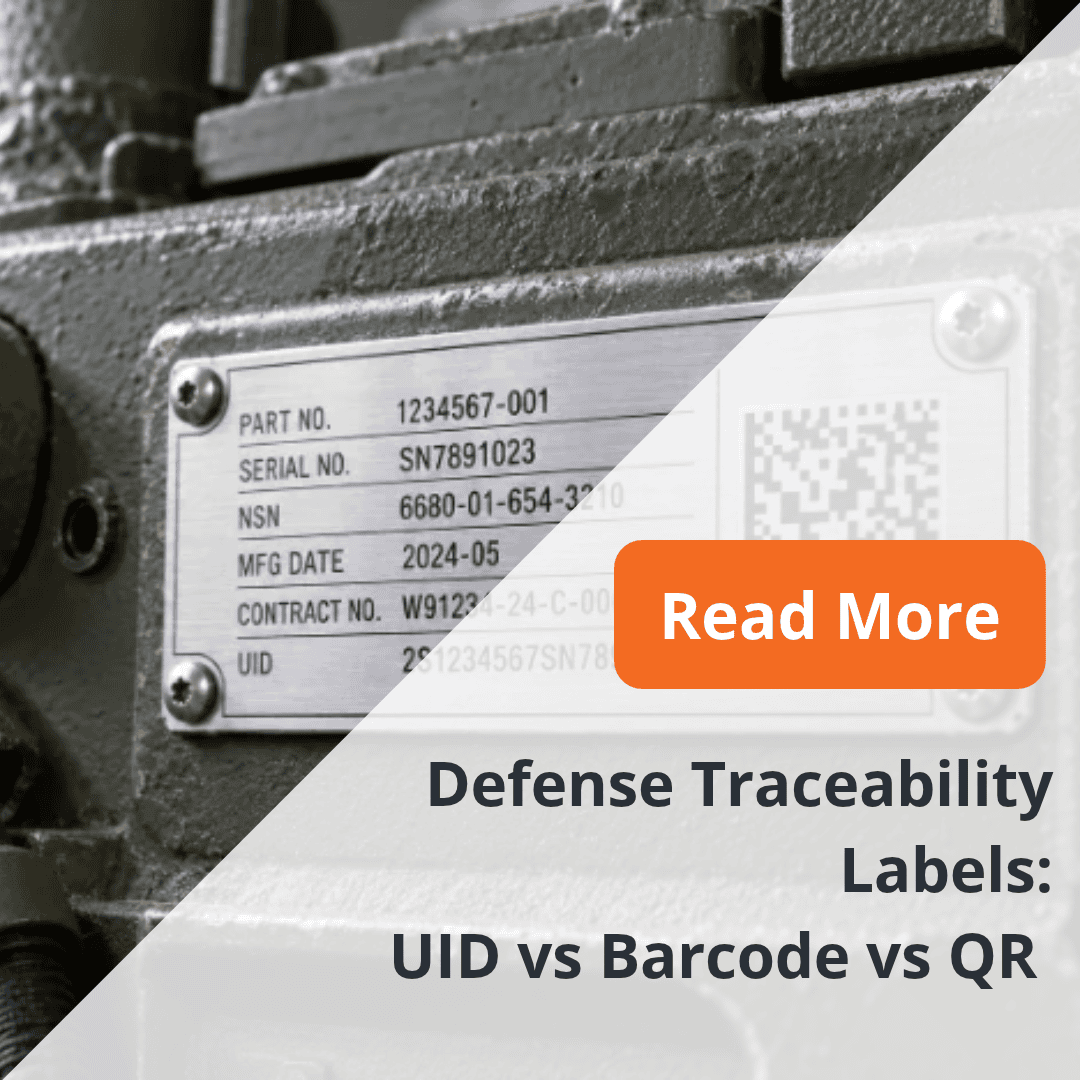
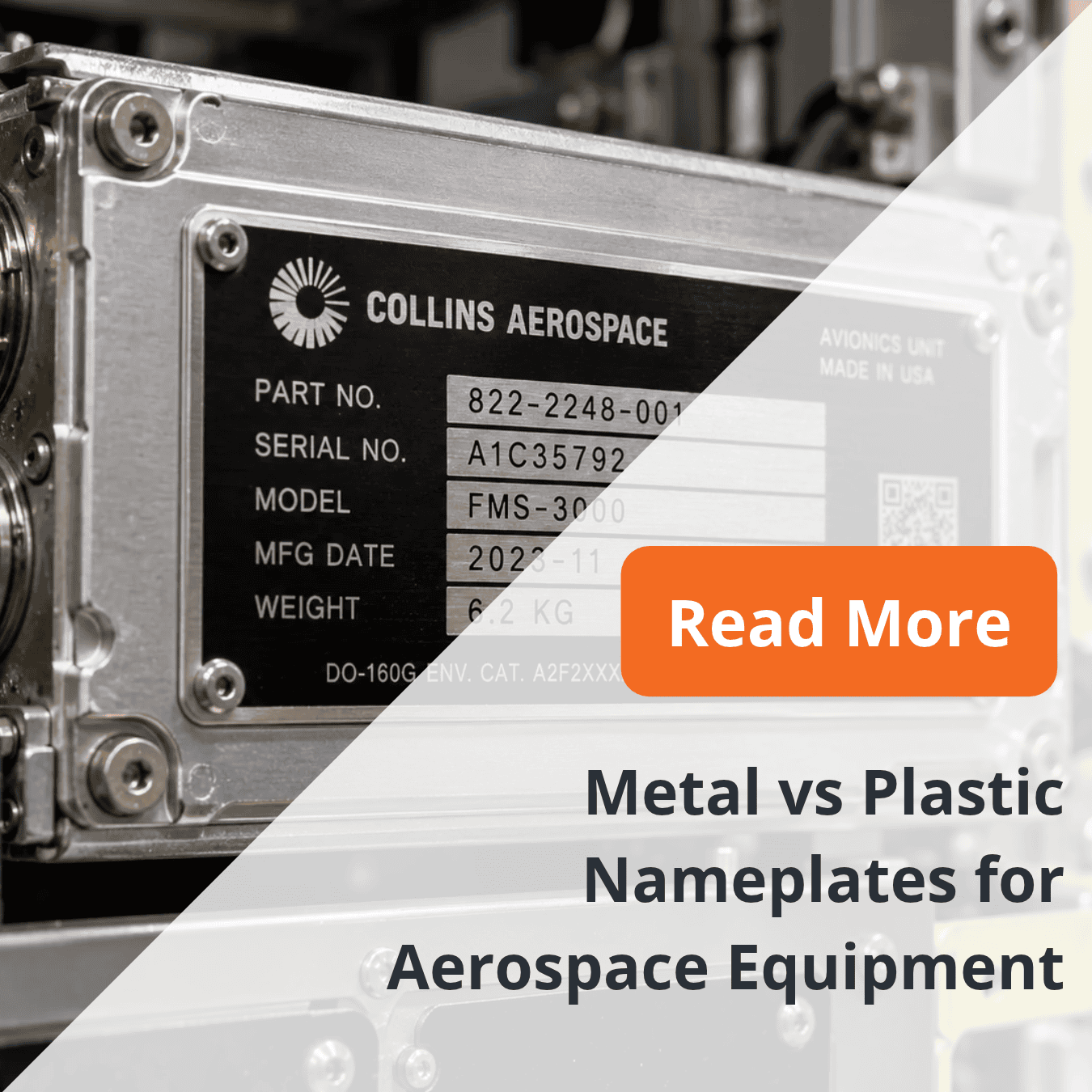
Aerospace equipment needs identification labels that stay clear and readable over time. From aircraft components to ground support equipment, aerospace nameplates help teams identify parts, track assets, and manage maintenance.
Two common choices are metal and plastic nameplates. Both can be durable, but each offers different benefits.
The best choice depends on the equipment, operating conditions, weight, and budget. Understanding these differences helps engineers and buyers select the right material.
Metal vs Plastic Aerospace Nameplates: Key Differences
Metal and plastic nameplates serve the same basic purpose. They display important information, such as serial numbers, model numbers, safety details, and equipment ratings.
However, their materials and performance can differ.
| Feature | Metal Nameplates | Plastic Nameplates |
| Common materials | Aluminum, stainless steel | Polyester, polycarbonate |
| Weight | Usually heavier | Usually lighter |
| Flexibility | Rigid | Flexible options available |
| Durability | Strong against physical wear | Depends on film and protective layers |
| Installation | Adhesive, screws, or rivets | Usually adhesive |
| Common use | Equipment plates and permanent identification | Equipment labels and printed graphics |
Both options can work well when designed for the right environment.
When Should You Choose Metal Nameplates?
Metal nameplates are a common choice for aerospace equipment that needs strong, long-lasting identification. 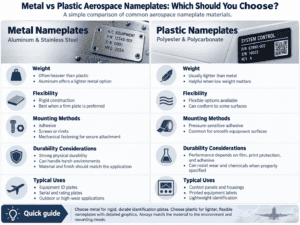
Aluminum nameplates offer a balance of strength and low weight. Stainless steel provides added strength for demanding applications.
Metal nameplates are often used for:
- Aircraft equipment identification
- Engine and machinery plates
- Serial number and rating plates
- Military ground support equipment
- Parts exposed to heavy handling
Metal plates can also use screws or rivets when an adhesive alone is not the preferred mounting method.
However, not all metals perform the same way. The material, finish, and printing method affect how well a nameplate handles moisture, chemicals, and wear.
When Are Plastic Nameplates a Better Choice?
Plastic nameplates offer a lightweight and flexible option for many aerospace applications.
Common materials include polyester and polycarbonate. These materials can support detailed graphics, serial numbers, and barcode labels.
Plastic nameplates are useful for:
- Electronic equipment housings
- Control panels and interfaces
- Lightweight equipment identification
- Indoor equipment and protected surfaces
NFI uses sub-surface printing for many custom plastic nameplates. This places the printed design behind a clear plastic layer to help protect it from wear.
Plastic nameplates can also be a practical choice when low tooling costs and custom shapes matter.
Still, material selection is important. Some plastic films handle heat, sunlight, or chemicals better than others.
Which Material Handles Harsh Aerospace Conditions Better?
Aerospace equipment may face temperature changes, moisture, cleaning chemicals, vibration, and frequent handling. 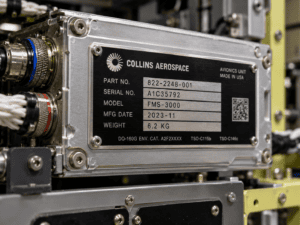
Metal nameplates often work well where rigid construction and resistance to physical damage matter.
Plastic nameplates can also resist chemicals and abrasion when the right film, ink protection, and adhesive are used.
Neither material is automatically better in every environment.
Before choosing, consider:
- Expected temperature range
- Exposure to water and cleaning chemicals
- Surface texture and coating
- Need for screws, rivets, or adhesive
- Required service life
Testing materials under expected conditions helps reduce the risk of failure.
How Do Weight and Cost Affect Your Choice?
Weight matters in aerospace design. Plastic nameplates are usually lighter than metal plates of similar size.
Cost also depends on the material, size, production volume, printing method, and installation needs.
Plastic options may offer lower tooling costs for some designs. Metal can provide value when a rigid plate and secure mounting are needed.
Buyers should consider more than the purchase price.
A label that fails early may require replacement, maintenance time, and new installation work.
Choosing the right material from the start can help control these costs.
Frequently Asked Questions
Are metal nameplates always more durable than plastic? 
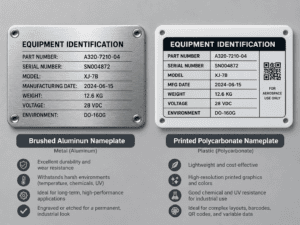
No. Durability depends on the material, finish, printing method, and environment. Both can perform well when designed for the application.
Can plastic nameplates be used on aerospace equipment?
Yes. Polyester and polycarbonate nameplates can suit many equipment applications. Their use should match the project’s requirements and operating conditions.
Which material is better for outdoor aerospace equipment?
It depends on sunlight, moisture, temperature, and chemical exposure. The specific metal or plastic construction should be checked before use.
Choose the Right Aerospace Nameplates With NFI
The best aerospace nameplates balance durability, weight, cost, and installation needs.
Metal nameplates provide rigid identification and several mounting options. Plastic nameplates offer lightweight designs, flexible construction, and detailed printed graphics.
NFI manufactures custom metal and plastic nameplates for demanding industrial and aerospace applications. Its team can help review material, adhesive, and design choices for your equipment.
Contact NFI to discuss durable aerospace nameplates and find the right identification solution for your application.