Safety labels help workers recognize hazards, understand operating instructions, and identify important equipment information. In an industrial facility, a consistent labeling system can make these messages easier to find and understand.
Standardization matters because equipment may come from different manufacturers, operate in different environments, and remain in service for many years. Warning labels, instruction labels, caution labels, and equipment identification should follow a clear strategy rather than being handled one machine at a time.
For manufacturers and plant operators, that strategy should address three areas: hazard communication, label durability, and long-term maintenance.
Hazard Communication Needs for Safety Labels
Effective safety labels communicate important information quickly. Workers should be able to recognize the type of message and understand what action may be required.
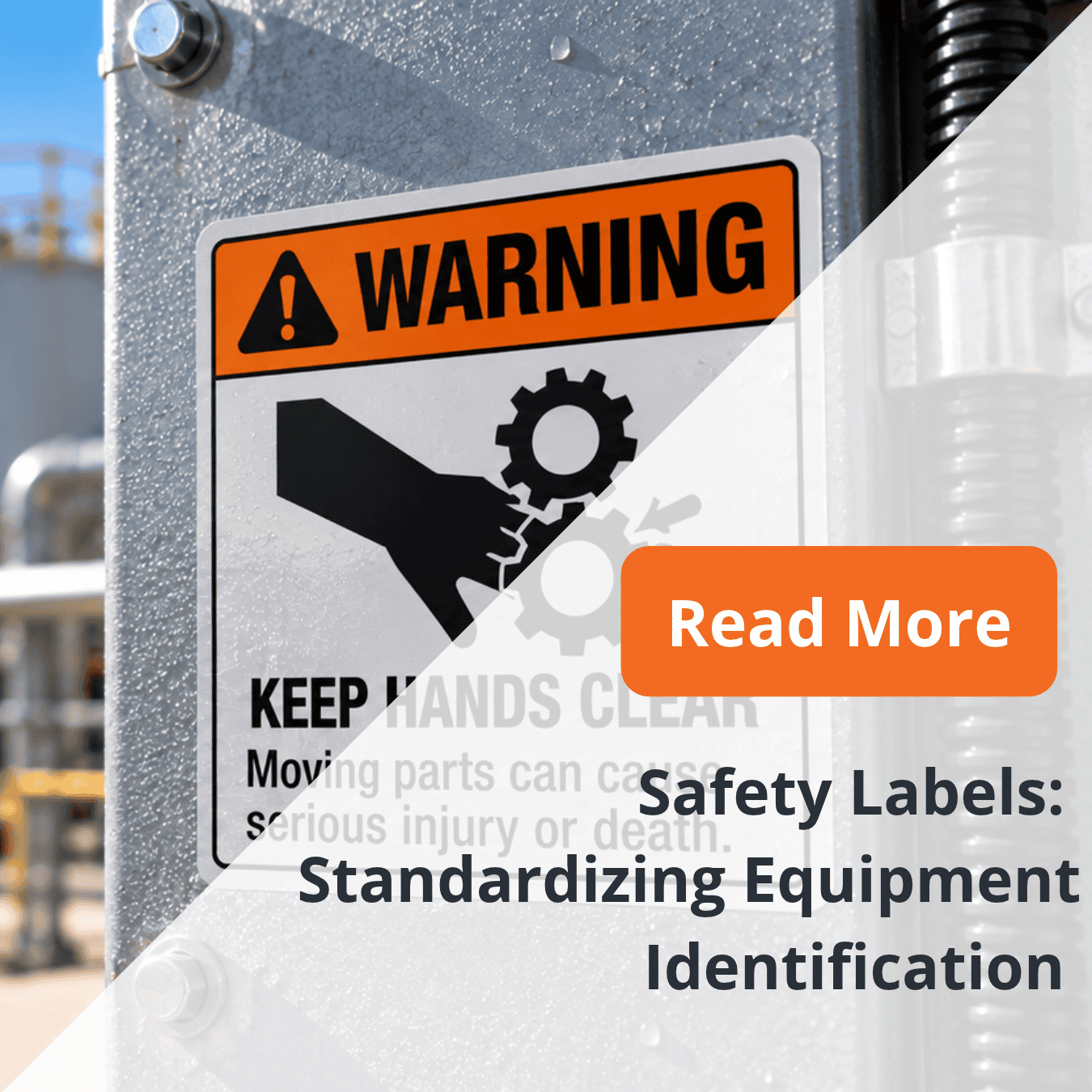
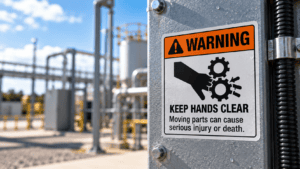
Different labels serve different purposes. Warning labels identify potential hazards. Caution labels can communicate situations requiring added attention. Instruction labels provide operating, maintenance, or procedural information. Other labels may identify equipment, controls, electrical information, or service points.
A standardized approach helps create consistency across machines and work areas. This can be especially useful in plants where employees operate multiple pieces of equipment or maintenance teams work throughout the facility.
Hazard communication labels should be designed around the specific equipment and application. Factors to evaluate include:
- Where the label will be installed

- Who needs to read the information
- Viewing distance and available space
- The type of hazard or instruction
- Environmental exposure
- Expected equipment service life
- Applicable labeling requirements or standards
Facilities should evaluate relevant regulatory and industry requirements for each application, including OSHA’s requirements for accident prevention signs and tags, where applicable. Industrial compliance labels may support broader safety and identification programs, but label specifications should reflect the actual equipment, environment, and requirements involved.
Legibility and Durability of Safety Labels
A safety message provides little value if workers can no longer read it.
Industrial environments can expose machine safety decals and other labels to abrasion, chemicals, cleaning agents, moisture, UV light, temperature changes, and frequent handling. Labels installed on outdoor equipment can face additional exposure from sunlight and weather.
Material selection should therefore be part of the safety label specification process.
Durable safety labels may use materials, adhesives, printing processes, protective laminates, or other constructions selected for the operating environment. The right construction depends on the surface, exposure conditions, expected lifespan, and information being displayed.
Legibility also involves more than material durability. Text size, contrast, graphics, spacing, and label placement all affect how quickly someone can understand a message.
For example, an equipment warning sticker placed behind a guard or in a poorly lit area may be difficult to notice even if the printed image remains intact. Label placement should be considered along with the physical construction.
NFI works with industrial manufacturers to develop durable identification products based on specific application needs. Rather than treating a safety label as a generic printed component, manufacturers can evaluate the full operating environment before selecting materials and construction.
Standardization and the Maintenance Lifecycle
Installing plant safety labels is only the beginning. Labels should remain part of the equipment maintenance lifecycle. 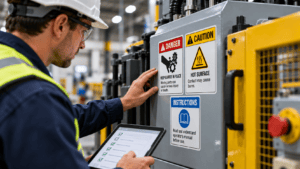
Standardization can make that process easier.
A facility can establish consistent rules for label formats, terminology, colors, symbols, materials, placement, and identification. These guidelines can help reduce unnecessary differences between departments, production lines, or equipment types.
Plants can also create a label inspection process as part of preventive maintenance. Teams can check labels for fading, peeling, scratches, chemical damage, missing information, or changes to the equipment.
When machinery is repaired, upgraded, or modified, existing safety labels should also be reviewed. A label that was correct when a machine was installed may no longer match the equipment after a modification.
Standardized identification can also simplify replacement. Maintaining approved artwork, part numbers, equipment references, and label specifications helps teams reorder the correct label instead of recreating it from scratch.
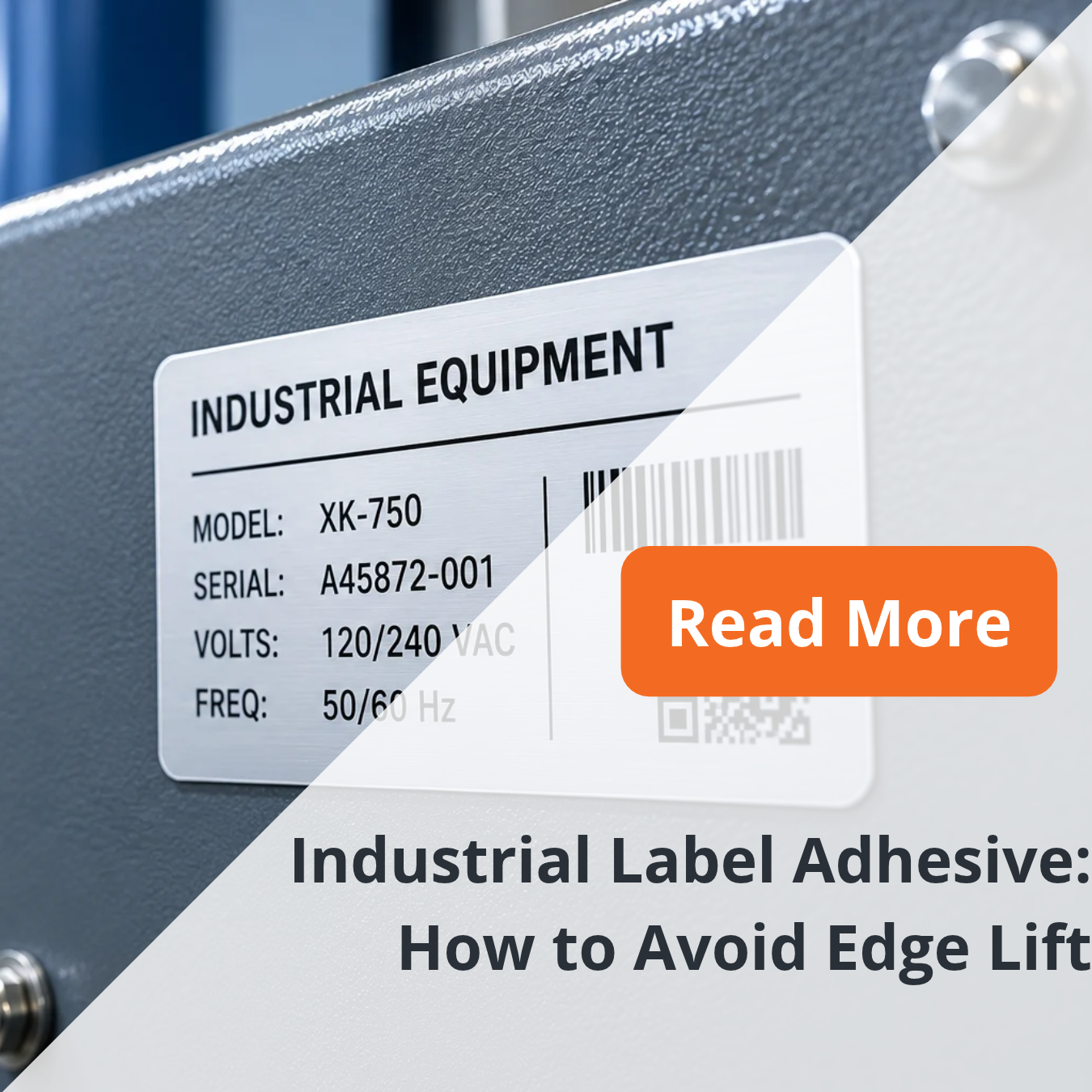
For facilities with large equipment populations, variable data, barcodes, QR codes, serial numbers, or asset identifiers may provide additional ways to connect physical equipment with maintenance or traceability systems.
Building a Consistent Equipment Labeling Program
A strong labeling program starts with understanding the equipment and the environment where each label will be used.
Manufacturers and facility teams should identify required warning, instruction, caution, and identification messages. From there, they can define common design rules and determine which materials and constructions are appropriate for different operating conditions.
The result is a more consistent approach to safety labels across the equipment lifecycle—from initial specification and installation to inspection and replacement.
Frequently Asked Questions
What is the purpose of safety labels on industrial equipment?
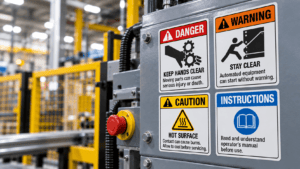 Safety labels communicate hazards, instructions, cautions, and other important information associated with equipment. They help workers identify information at or near the point where it is needed.
What makes industrial safety labels durable?
Durability depends on the label material, adhesive, printing method, protective construction, surface, and operating environment. Exposure to chemicals, abrasion, UV light, moisture, and temperature should be considered.
How often should equipment safety labels be inspected?
Inspection frequency depends on the equipment and operating environment. Facilities can incorporate label condition checks into routine preventive maintenance and equipment inspections.
When should warning labels be replaced?
Warning labels should be evaluated when they become damaged, difficult to read, detached, or no longer match the equipment or hazard information. Facilities should also review labels when equipment is modified.
Standardize Safety Labels for Long-Term Equipment Use
Standardized safety labels can help industrial facilities maintain clear warning, instruction, and identification information across equipment and work areas. The right program considers communication needs, readability, environmental exposure, and the maintenance lifecycle.
NFI provides durable industrial identification solutions for demanding applications, including warning and safety labels, equipment labels, nameplates, variable data labels, and traceability products.
Contact NFI to discuss durable labeling solutions for your equipment, asset tracking, or traceability program.