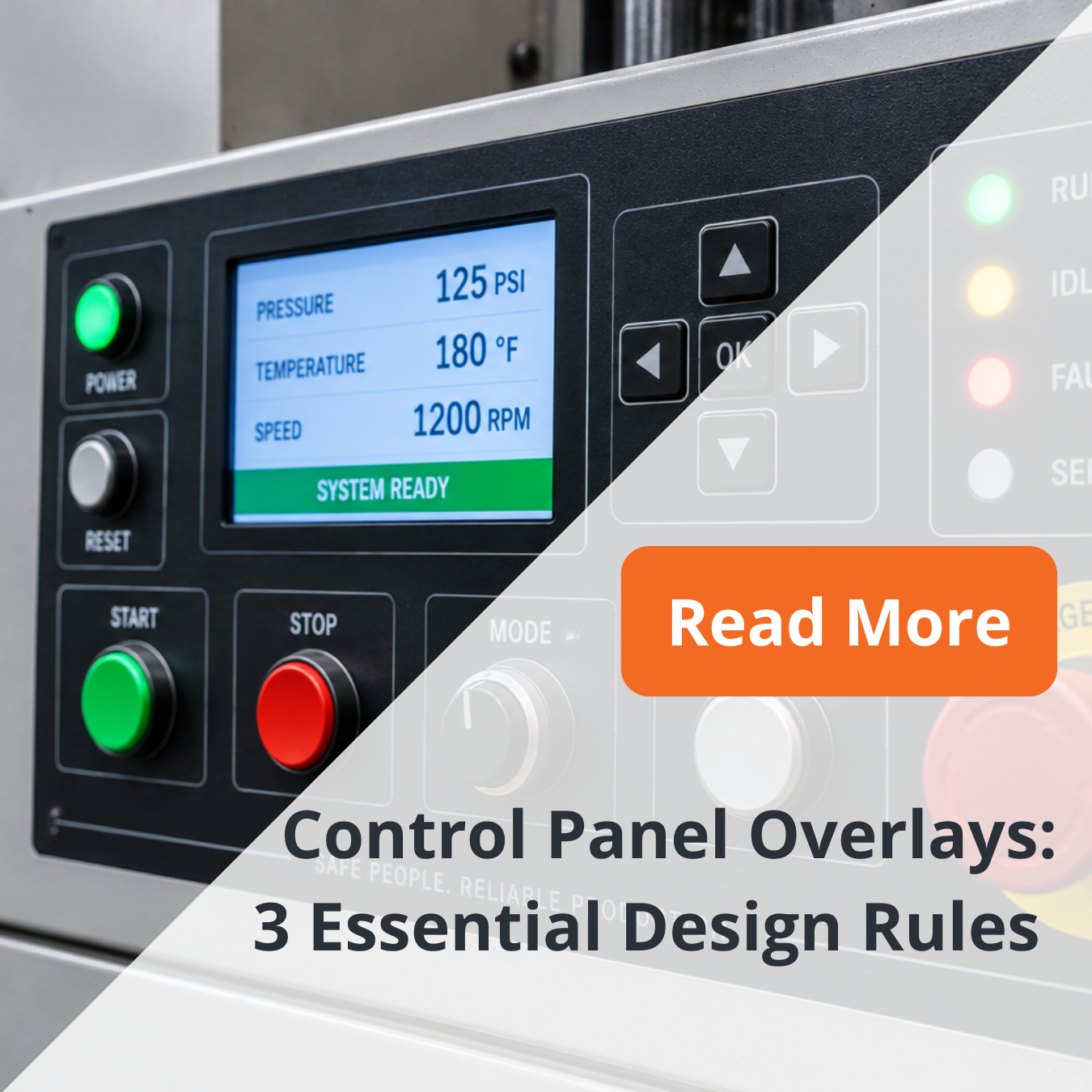

A membrane switch combines a user interface, electrical switching function, and graphic identification into a thin, integrated assembly. It can replace separate mechanical buttons, labels, and wiring components in equipment where space, cleanability, durability, or interface simplicity matter.
For engineers evaluating an interface for a new product, the important question is not simply whether a membrane switch will fit. The construction, tactile response, sealing, graphics, circuitry, connectors, and operating environment all need to work together.
This membrane switch FAQ answers the questions NFI most often encounters during the design and specification process.
What Is a Membrane Switch?
A membrane switch is a low-profile electrical switch made from several thin functional layers. When the user presses a defined key area, conductive elements within the switch make contact and complete an electrical circuit.
Unlike a conventional mechanical switch made from multiple independent components, a membrane switch can combine several interface functions into one assembly. These can include printed graphics, individual keys, circuitry, tactile feedback, windows, indicators, shielding, and connection tails.
For applications requiring a custom interface rather than an off-the-shelf switch, review NFI membrane switch capabilities and the available construction and design options.
How Do Membrane Switches Work?
A typical membrane switch uses flexible layers separated by a spacer. Conductive contacts are positioned so that they remain apart when the key is at rest.
Pressing a key causes the upper contact area to deflect and touch the lower circuit. This closes the circuit and sends the required electrical signal. When pressure is removed, the layers return to their original position and the circuit opens again.
The exact design depends on the required electrical configuration, key feel, operating environment, graphic interface, and connection method.
What Is Inside a Membrane Switch?
Although every design is application-specific, a membrane switch commonly combines several functional elements.
The visible upper surface is the graphic interface the operator sees and touches. Beneath it, spacer and circuit layers define the switching areas and electrical paths. Adhesive layers hold the assembly together and attach it to the equipment.
Other design features can be incorporated where required, including tactile metal domes, shielding, windows, backlighting elements, connectors, and environmental sealing.
The correct membrane switch construction therefore starts with the application rather than with a standard layer stack.
Tactile or Non-Tactile: Which Is Better?
Neither approach is universally better.
A tactile membrane switch gives the operator physical feedback when a key is actuated. This can be useful when users need confirmation that an input has been made without relying exclusively on a display or audible signal.
A non-tactile design may be preferable where a flatter interface, different actuation behavior, or simplified construction is required.
The decision should reflect how the equipment is used, who operates it, and the type of feedback the application requires.
How Durable Are Membrane Switches?
Durability depends heavily on design choices and operating conditions.
An interface used in clean indoor equipment faces different demands from one exposed to cleaning chemicals, moisture, repeated abrasion, dust, temperature variation, or intensive daily use.
That is why the specification process should consider environmental exposure, cleaning procedures, expected use, materials, adhesive selection, and sealing requirements before the switch construction is finalized.
A membrane switch should be engineered for its actual operating environment rather than selected solely from a standard specification.
Can Membrane Switches Be Sealed?
Membrane switches can be designed for applications where protection from moisture, contaminants, or repeated cleaning is important.
Sealing performance depends on the complete assembly: overlay, spacer construction, adhesives, tail exit, connector design, enclosure interface, and installation method.
For equipment used in demanding or frequently cleaned environments, these factors should be addressed early in the design process rather than added after the interface has already been developed.
What Is the Difference Between a Membrane Switch and a Mechanical Switch?
Mechanical switches typically use individual physical switching mechanisms mounted into an enclosure or panel.
A membrane switch integrates several keys and interface elements into a thin assembly.
Mechanical switches can be appropriate where individual discrete controls are required. Membrane switches are especially useful when the product benefits from a low-profile interface, custom graphics, multiple keys in one assembly, simplified cleaning, or a purpose-built control surface.
The decision should therefore be based on the application and user experience rather than on one technology being universally superior.
What Should Engineers Define Before Requesting a Membrane Switch?
A good membrane switch design brief should describe the product and its operating environment as clearly as possible.
Useful information includes the number and location of keys, electrical requirements, tactile preferences, graphics, display or indicator windows, environmental exposure, cleaning procedures, space limitations, connection requirements, and expected interaction with the equipment enclosure.
Providing this context early makes it easier to select an appropriate construction and identify potential design issues before production.
Can an Existing Membrane Switch Be Reproduced?
Some projects begin with a new product design. Others begin with an existing membrane switch that needs to be replaced, updated, or sourced from another manufacturer.
In either case, the important step is to establish the functional requirements of the existing interface rather than simply reproduce its appearance.
Circuitry, actuation, dimensions, materials, graphics, connectors, and environmental requirements all need to be considered.
From FAQ to Specification
A membrane switch is not simply a printed button panel. It is an engineered interface in which mechanical, electrical, graphic, and environmental requirements meet.
The earlier those requirements are brought together, the easier it becomes to select a construction that supports the equipment throughout its intended service life.
More technical guidance: Technical Resources.