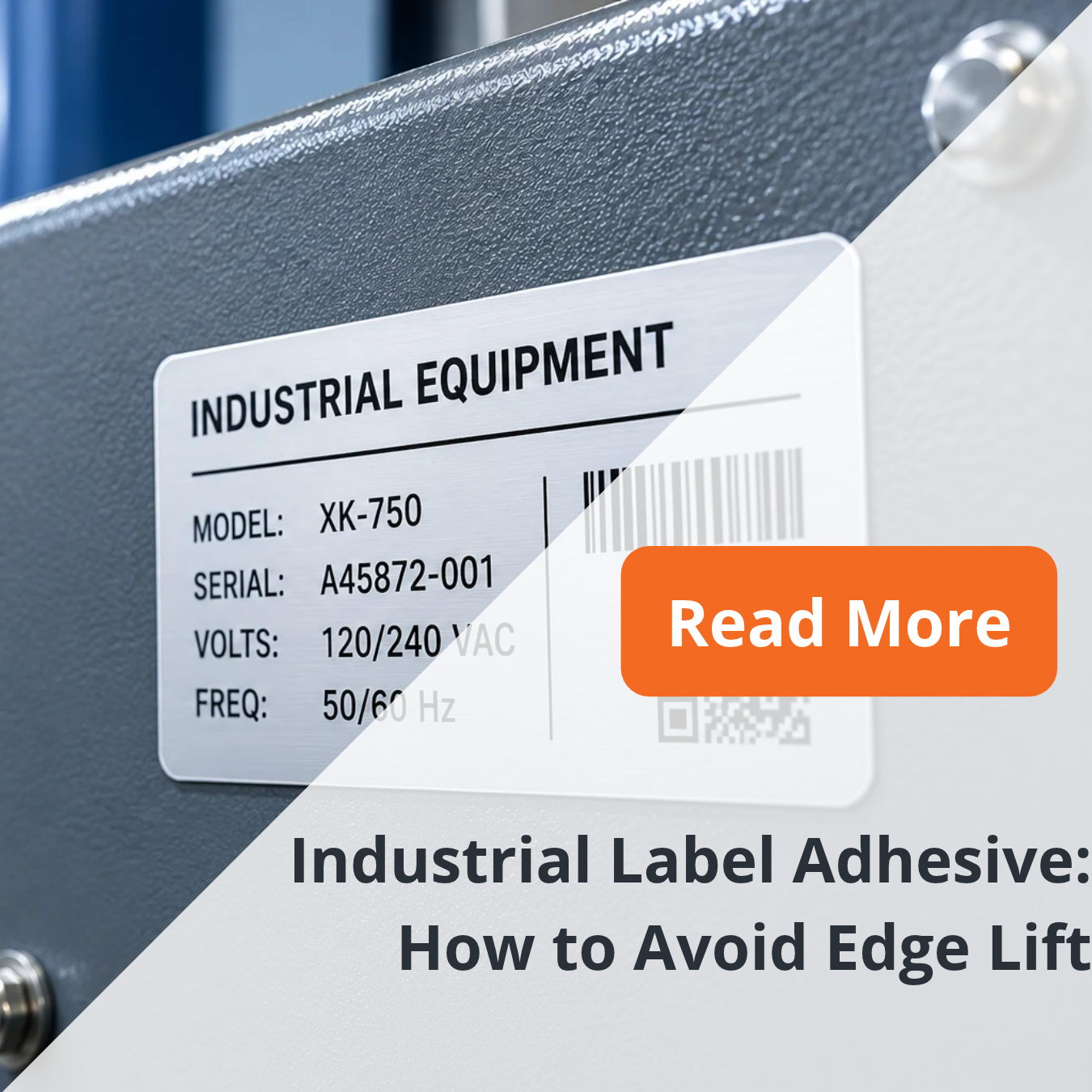
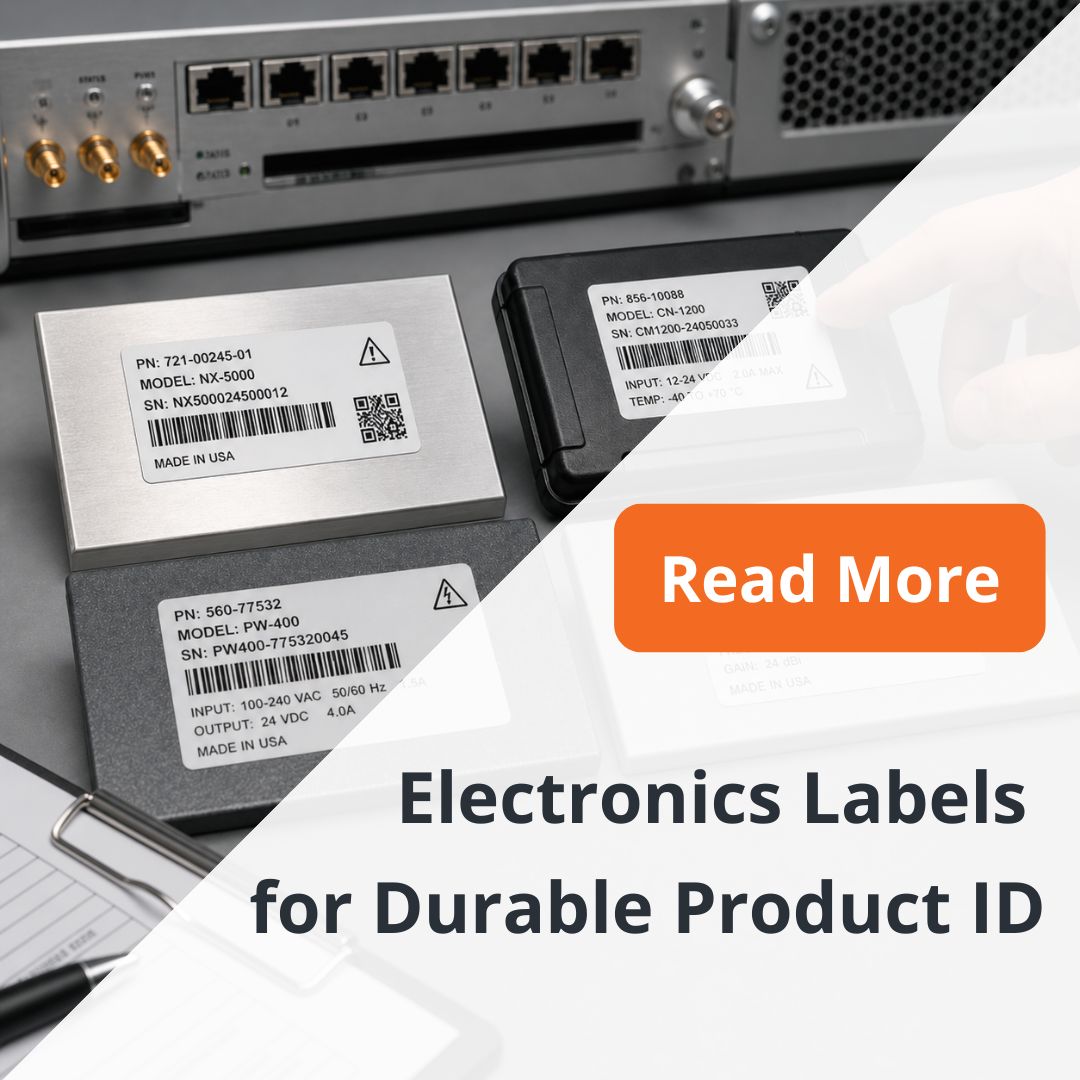
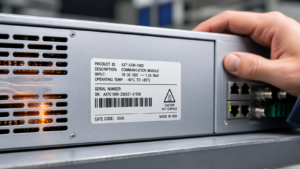
Electronics labels help people identify, use, service, and review technology products. They may show a model number, serial number, barcode, warning, rating, or compliance mark. When these labels fail, the product can become harder to track, inspect, repair, or approve.
For technology and communication products, labels must do more than look clean on day one. They need to stay readable after heat, handling, shipping, cleaning, and daily use. NFI makes electronics labels, overlays, nameplates, barcode labels, UID labels, and durable identification products.
Problem Context: Why Electronics Labels Fail 
Many electronics labels fail because the label was not matched to the job. A standard label may work on a box, but it may not last on a device. It may not last on a control panel, enclosure, rack unit, power supply, or communication system.
Heat can weaken some adhesives. Frequent handling can scratch printed text.
Cleaning chemicals can fade graphics. Curved or textured surfaces can cause edges to lift. Dust, oil, and moisture can reduce label performance if the material and adhesive are not chosen with care.
Poor label performance creates real problems. A faded barcode can slow inventory checks. A missing serial number can make service harder. Unreadable warning labels electronics teams rely on may create confusion. A failed label can also make a product look lower quality.
Durable technology labels protect key information through the product life cycle. They support traceability, service, safety messages, and brand quality.
Best Practices and Spec Tips for Electronics Labels
Start by defining where the label will be used. The best electronics labels depend on the surface, temperature, exposure, and service life. A label on smooth metal may need a different adhesive than a label on molded plastic, powder-coated metal, or a textured part.
Next, decide what the label must show. Product identification labels may include part numbers, model numbers, barcodes, QR codes, serial numbers, logos, ratings, or service data. Component identification labels may need clear text for tight spaces. Communication equipment labels may need strong print and firm adhesion.
Choose materials based on risk. Heat resistant labels can help near warm parts, power systems, and enclosed electronics. Permanent electronics labels can help when the product must keep its ID for years. Durable equipment labels may need resistance to abrasion, cleaners, oil, moisture, or UV exposure.
For compliance labels, review the requirements early. Some products need marks, rating data, warning text, or label placement. NFI can help you build labels that support design, production, and review needs. Your team should confirm rules for your product and market.
Testing and Implementation Checklist
Test labels before full production. Use real parts when possible. This helps your team find problems before they affect shipments, inspections, or customers.
Use this checklist:
- Test the label on the final surface.
- Check adhesion after heat exposure.
- Rub the print to test scratch resistance.
- Expose the label to likely cleaners or oils.
- Scan barcodes after handling and aging.
- Confirm text size, contrast, and placement.
- Review warning labels electronics users must see.
- Make sure operators can apply labels cleanly.
- Check that liners, rolls, or sheets fit your process.
- Keep approved label specs on file.
Good labels make production easier and products easier to manage. They also reduce the risk of rework when a label does not meet the application.
Conclusion
Electronics labels carry important product information. The right label helps teams protect IDs, warnings, barcodes, ratings, and service data.
NFI helps technology and communication manufacturers create durable technology labels, compliance labels, heat resistant labels, permanent electronics labels, and product identification labels. Contact NFI to discuss the right label construction for your next project.