Military equipment needs labels that stay clear and easy to read. These labels help teams identify parts, track assets, and manage repairs.
But military label requirements can be confusing. Terms like MIL-SPEC, MIL-STD-130, and ITAR often appear in defense projects.
Each term means something different. Understanding them helps buyers choose the right labels and suppliers.
MIL-SPEC vs ITAR: What Is the Difference?
MIL-SPEC and ITAR cover different parts of military manufacturing.
MIL-SPEC refers to military specifications. These documents set rules for certain products, materials, and markings.
ITAR stands for International Traffic in Arms Regulations. These rules control certain defense exports and technical information.
| MIL-SPEC | ITAR |
| Sets technical requirements | Controls certain defense exports and data |
| May cover materials and markings | May affect how project files are shared |
| Depends on contract requirements | Depends on export-control rules |
| Focuses on the product | Focuses on controlled items and activities |
A military label may need to meet a marking standard even when ITAR does not apply. 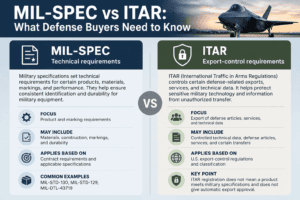
What Are MIL-SPEC Label Requirements?
MIL-SPEC documents help define how certain military products should be made.
For labels and nameplates, these rules may cover materials, markings, and durability.
Common examples include:
- MIL-STD-130: Rules for marking U.S. military property.
- MIL-STD-129: Rules for marking military shipments and storage.
- MIL-DTL-43719: Requirements for certain adhesive markers and decals.
Each standard has a different purpose.
Not every military label must follow all these rules. Buyers should check their contract and drawings before ordering.
How Does MIL-STD-130 Affect Military Nameplates?
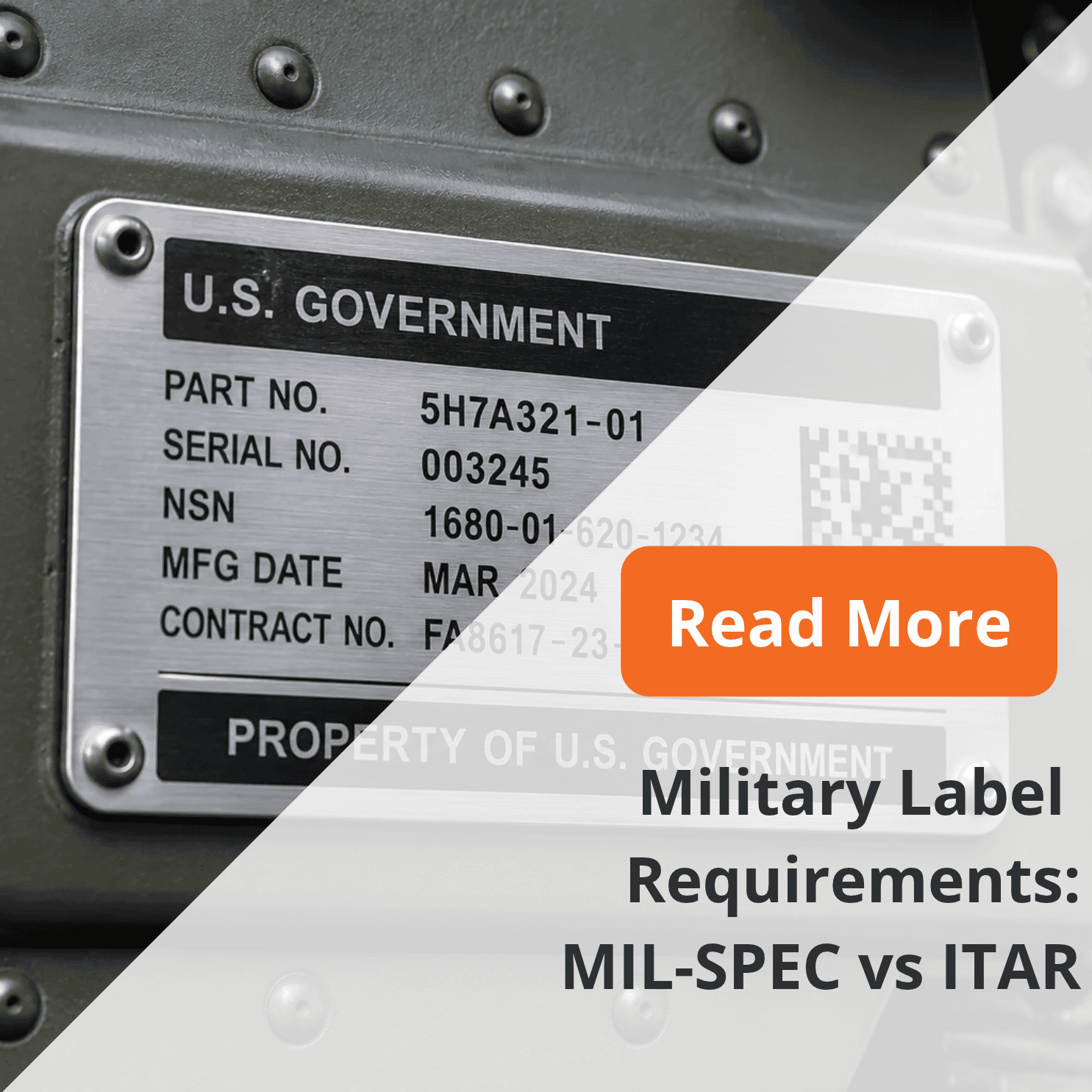
MIL-STD-130 sets identification marking rules for certain U.S. military equipment.
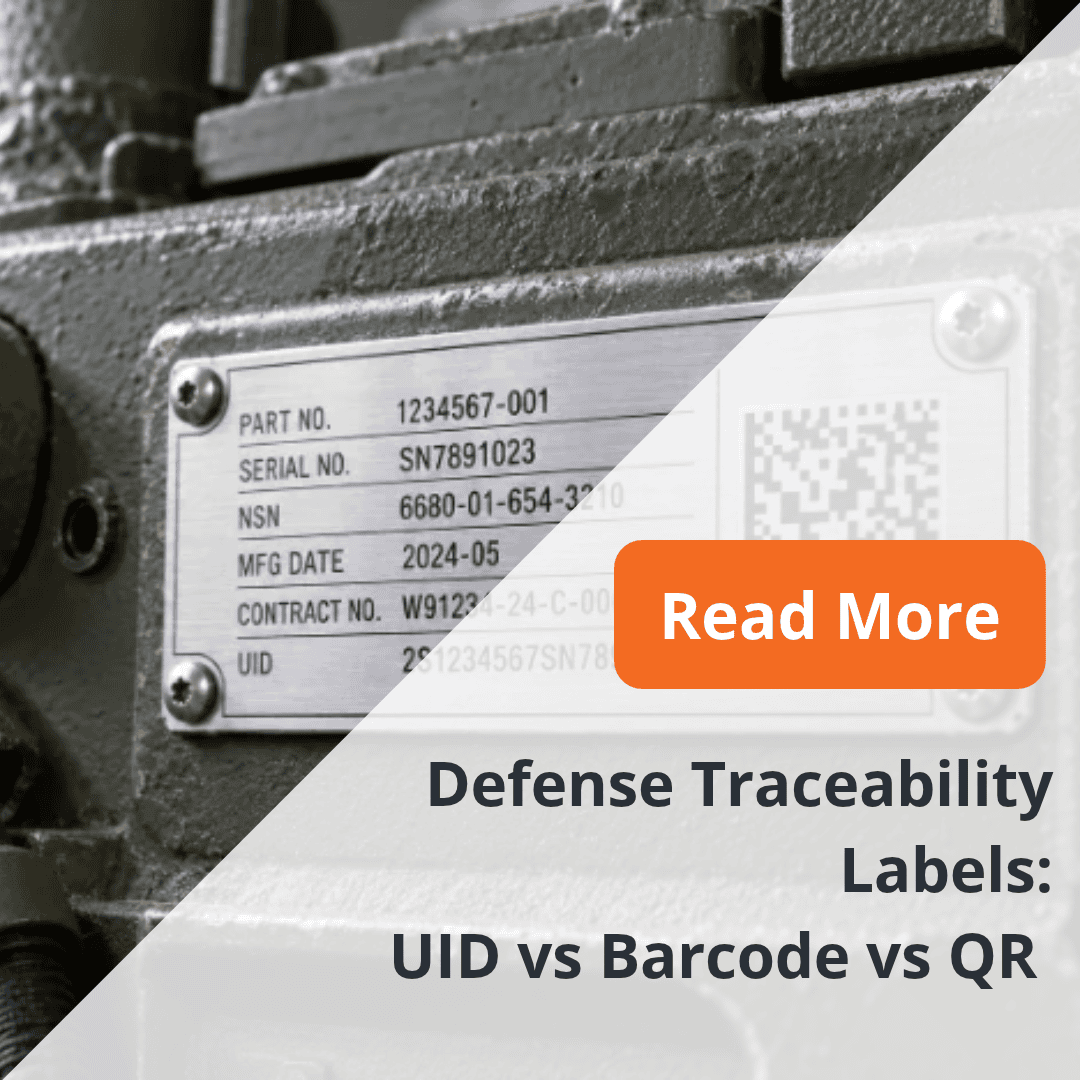
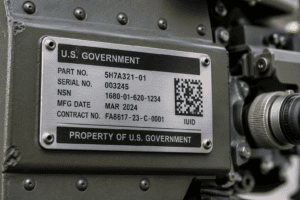
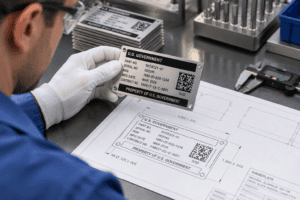
A nameplate may need to show a part number, serial number, or unique item identifier.
Some contracts also require Item Unique Identification (IUID). This system uses a Data Matrix code to identify individual items.
For example, an aircraft part may need a metal nameplate that stays readable during years of use and repair.
The exact marking depends on the contract.
A regular barcode or QR code does not replace a required IUID Data Matrix mark.
What Does ITAR Mean for Military Labels? 
ITAR is a U.S. rule that controls certain defense exports, services, and technical data.
For label projects, ITAR may matter when a supplier receives controlled drawings or technical files.
This means companies need to check how sensitive project information is stored, shared, and accessed.
ITAR registration does not mean a label meets MIL-SPEC requirements. It also does not give a company automatic export approval.
Defense buyers should confirm any required controls before sharing project files.
What Should You Ask a Military Label Supplier?
Choosing a supplier takes more than comparing prices.
Before ordering military labels, ask:
- Can you review our military marking requirements?
- Which materials will work best for our equipment?
- Can you produce serial numbers and UID labels?
- Can you provide samples or label checks?
- How do you handle controlled project files when needed?
These questions help buyers choose labels that fit their needs.
They also help prevent mistakes before production starts.
How Can NFI Help With Military Labels?
NFI makes custom labels and nameplates for military and aerospace equipment.
Its products include:
- Metal nameplates
- Durable decals
- Serial number labels
- Barcode labels
- UID Data Matrix labels
NFI can also help customers choose materials and adhesives.
The team can review drawings and marking needs to help select a suitable label design.
Any required testing, documents, or special project controls should be confirmed before production.
Frequently Asked Questions
Is MIL-SPEC the same as ITAR?
 Is MIL-SPEC the same as ITAR?
No. MIL-SPEC sets technical requirements. ITAR controls certain defense exports, services, and technical data.
Do all military labels need to meet MIL-STD-130?
No. Requirements depend on the equipment, contract, and applicable marking rules.
Does ITAR registration mean a supplier is MIL-SPEC certified?
No. ITAR registration and meeting a military specification are two different matters.
Choose Military Labels With NFI
Understanding military label requirements makes it easier to choose the right identification solution.
MIL-SPEC documents set technical requirements. MIL-STD-130 covers equipment marking. ITAR controls certain defense-related exports and information.
NFI helps military and aerospace manufacturers choose durable labels, nameplates, and identification products.
Contact NFI to discuss your military label requirements, materials, and project needs.